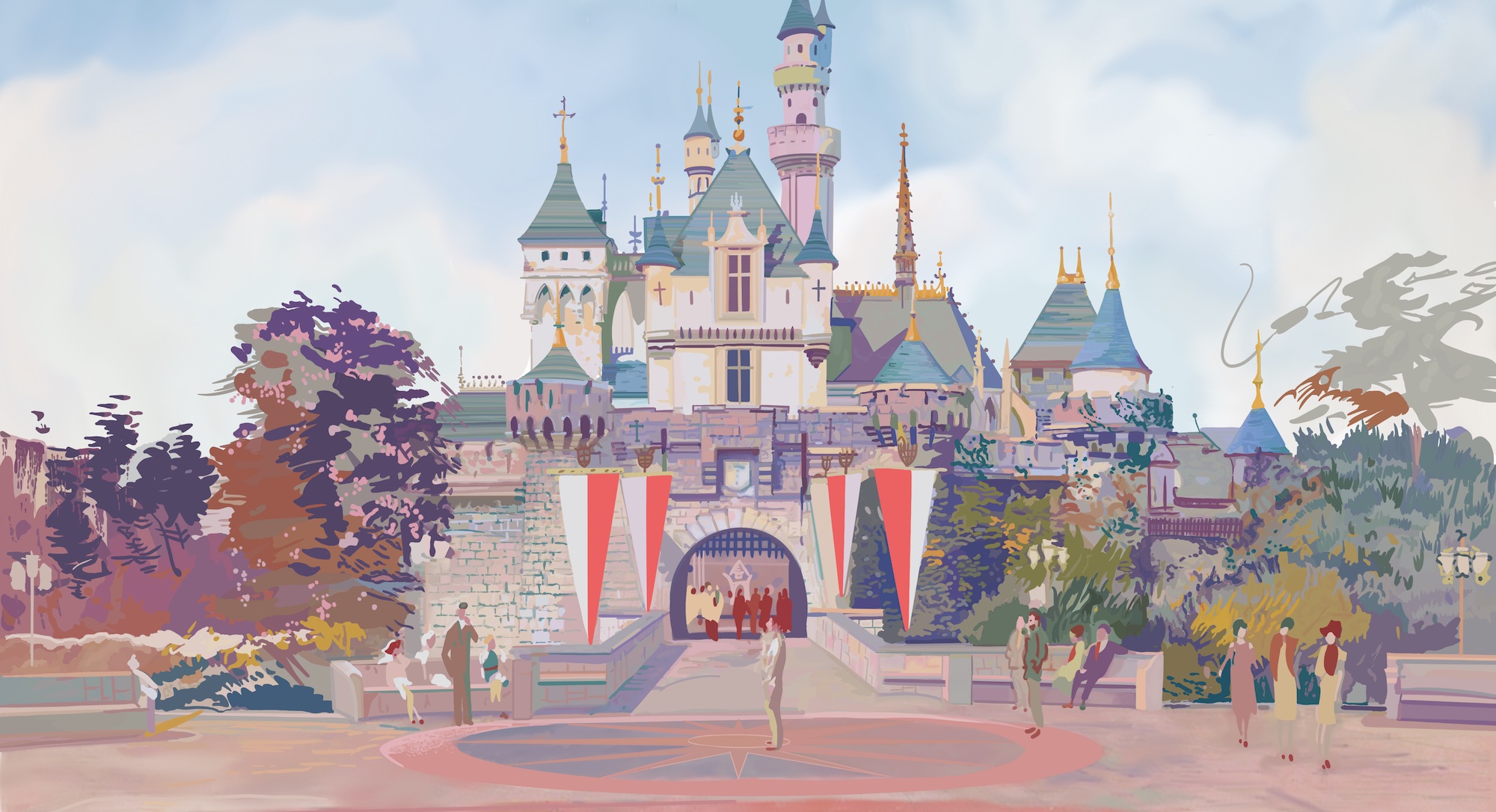


As any patriotic American will tell you, 1776 was a year of great importance in the story of the modern world. After all, it’s then that the word “souvenir” was first used in an English language publication to describe mementos from travel. Even if the word didn’t enter English until 250 years ago, historians have found evidence of souvenirs in the ephemera of the Roman Empire and even Ancient Egypt, suggesting that people have retained stuff specifically to remember their travels for millennia.
But as any Imagineering aficionados’ closets, mantles, garages, fridges, and basements will prove, no one has mastered the art of the souvenir quite like the theme park. From the humble Mouse Ears, postcards, and silhouettes of Walt’s time to the mystery pins, plastic popcorn buckets, and PhotoPass packages of today, theme parks have done an exceptional job of establishing themselves as the places “Where Memories Are Made*”, * if you invest in the collateral to keep them.
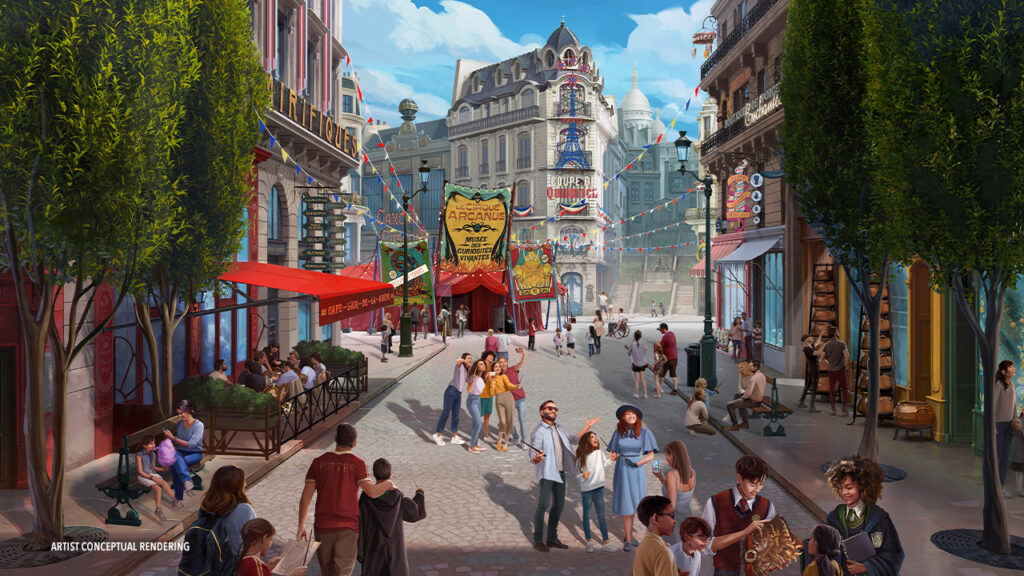
Which brings us to the new frontier of experience design: the era of the “Living Land” that immerses visitors fully into a place plucked from the screen; where we are guests are invited to inhabit the to-scale, really-for-real worlds of our favorite characters – which, of course, wouldn’t be complete without dining and shopping like they do. The great shift of the 21st century is that idea that the land itself is the E-Ticket. And fittingly, the souvenirs to remember it are exclusive, geo-fenced, canon, and entirely “in-universe” must-haves that allow us to feel like a part of the story…
A companion to our look into the Original Worlds, Original Mythologies, Original Characters, and Original Eats that define these “Living Lands,” let’s assemble a wishlist of in-universe retail wonders from around the globe…
Do you love armchair Imagineering, in-depth storytelling, and seeing the theme parks we love differently? Park Lore is an ad-free, quality-over-quantity, one-person project centered on building a world-class collection of the interconnected stories of theme park attractions, design projects, and industry explorations.
This feature is one that’s usually locked in our Member Vault, where Park Lore patrons can find hand-drawn art, armchair Imagineering walkthroughs, and other in-depth Special Features, as well as quick-read, just-for-fun Extra Features. Thanks to supporting Members, this feature is temporarily unlocked as a preview!
But if you value my mission to provide clickbait-free, ad-free deep dives and new ways to see the parks, consider becoming a supporting Member of Park Lore for as little as $2 / month. That support is what keeps this unique themed entertainment storytelling project open, ad-free, and available to all. Thank you!
1. The Wizarding World
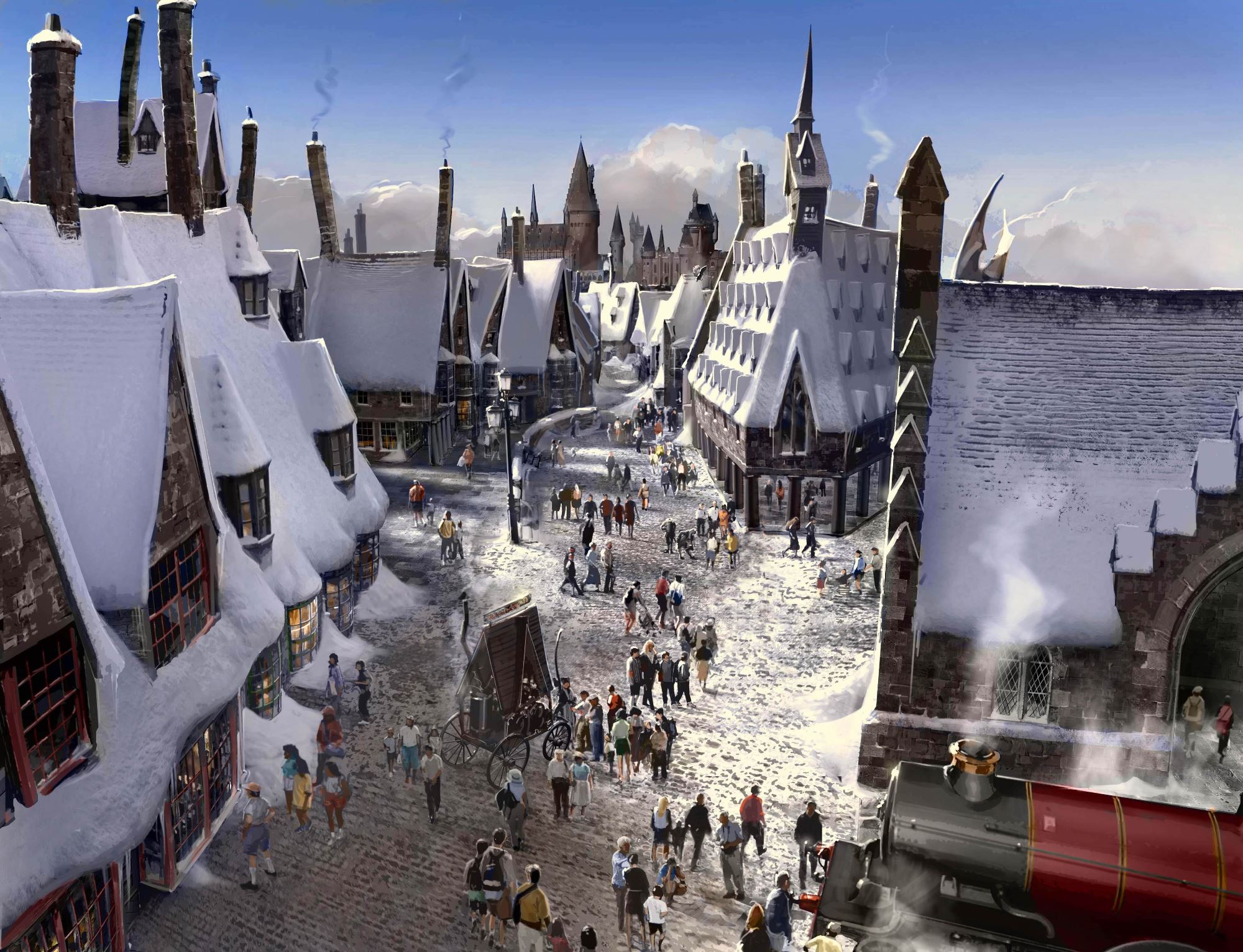
As anyone will tell you, it all began with the Wizarding World of Harry Potter – the first (and arguably, most holistically successful) “Living Land.” You’ll remember that when the first Wizarding World opened in 2010, industry observers looked on in breathless awe as guests queued not just for the land’s E-Ticket ride, but for its shops. Indeed, the snow-capped Scottish village of Hogsmeade served right out the gate as the perfect “plucked-from-the-screen” place where guests could literally cast themselves as Hogwarts students – including the dining and shopping therein.
More to the point, though, the Wizarding World’s true home run was its then-controversial choice to break the “rules” of theme park retail. No Harry Potter LEGO sets. No Harry Potter video games. No Harry Potter action figures. Instead, its retail outlets would serve up only the “in-universe” goods you’d expect in the “real” Hogsmeade: Hogwarts house robes, woolen sweaters and scarves, quills and ink, journals, wax stamps, and Wizarding candies like Chocolate Frogs, Every-Flavor Beans, and Cauldron Cakes.
Obviously, the bet paid off, creating the “Living Land” retail industry we know today. The Wizarding World, meanwhile, spans three separate locales: the original Hogsmeade (at Universal Islands of Adventure and Universal Studios Hollywood, Japan, and Beijing) and the unprecedented and world-expanding Orlando-exclusive follow-ups, Diagon Alley (at Universal Studios Florida) and Ministry of Magic (at Universal Epic Universe).
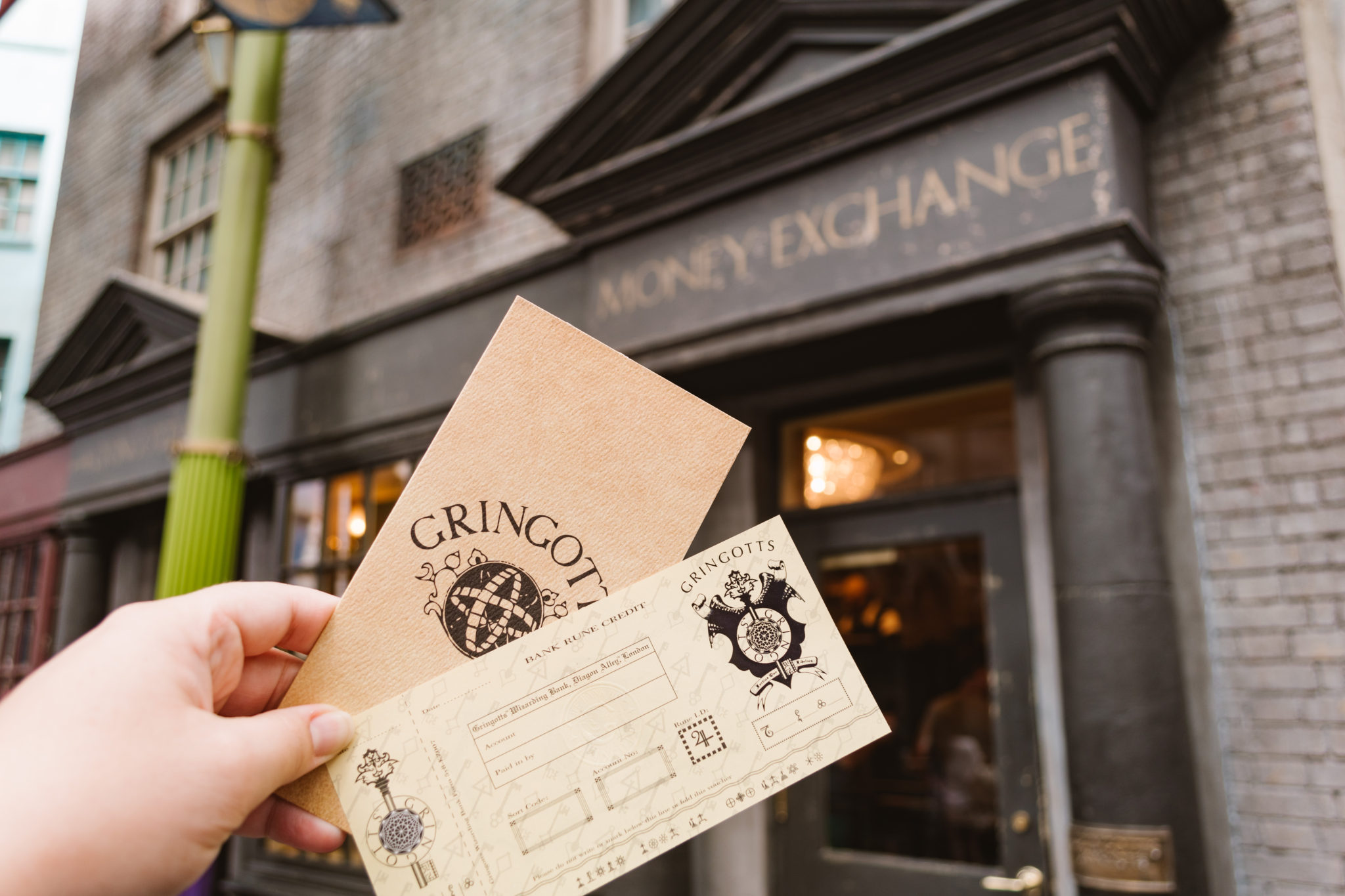
Each of the three corners of the Wizarding World invites guests to explore elaborate and imaginative retail corridors (a Scottish village, a London mall, and Parisian streetscape, respectively) offering shared and exclusive items from cramped, enchanted storefronts. “The land is the E-Ticket” here, where entire mornings can be spent perusing shops and bantering with shop keeps as you collect mementos ranging from shoulder owls to Butterbeer mugs, Quidditch gear to “Gringotts Bank Notes” (above, where your “Muggle money” is exchanged for a unique, collectible, and in-universe disguised Universal gift card).
But of course, one Wizarding World memento reigns supreme:
The Wand
PRICE: $65 – $85
Perhaps the single most influential theme park souvenir of all time, the Wand debuted with the original Wizarding World in 2010. (The presence of an “Ollivanders” wand shop in Hogsmeade allegedly required special permission from series creator J.K. Rowling, given that students actually get their first wand at an Ollivanders in Diagon Alley, not in Hogsmeade.)
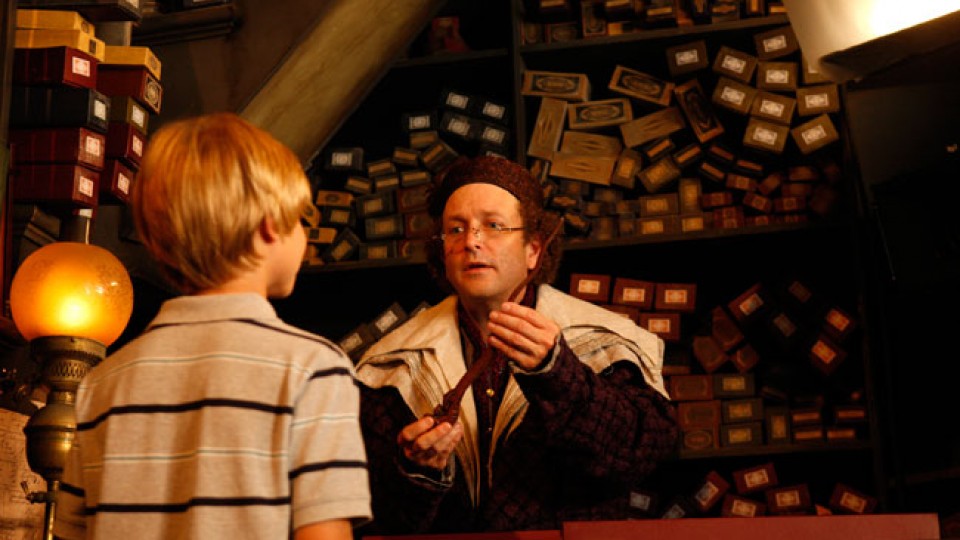
Part attraction and part retail, Ollivanders invites a small group of guests into the cluttered, lantern-lit interior of the historic shop (“Makers of Fine Wands since 328 B.C.,” after all). Inside, they meet with a Wandkeeper who chooses one lucky would-be Wizard to test out a few wands until – with a supernatural wind and a flourish of John Williams’ score – “the wand chooses the wizard.” That signals the rest of us to exit out into the showroom, free to sort through cluttered shelves of oblong boxes, searching for our own personal wands.
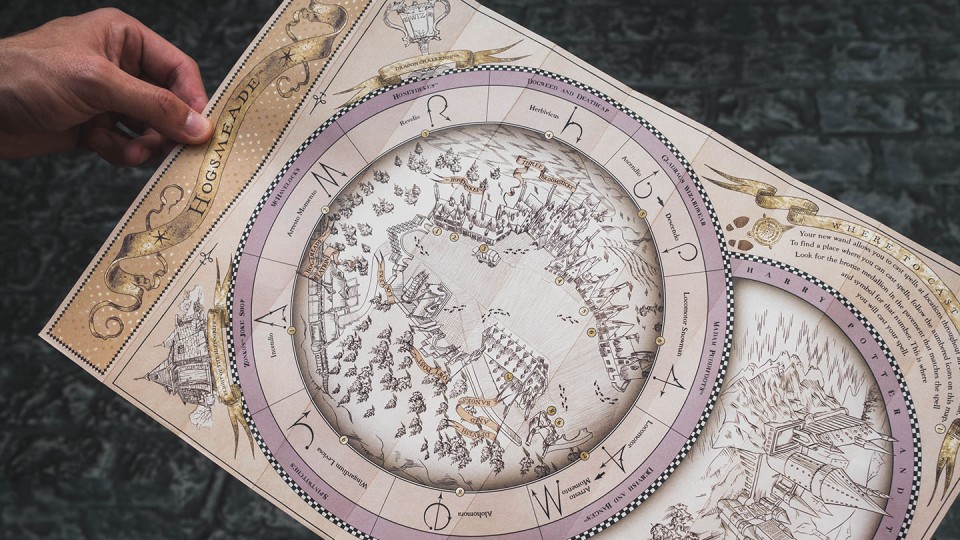
It wasn’t until the opening of Diagon Alley (with its own, canon-accurate Ollivanders) in 2014 that Universal upgraded its collection to feature interactive wands. Far more than just a take-home souvenir for the mantle, Wands unlock an entire attraction embedded in the Wizarding World. Tucked gently into the Ollivanders box is an enchanting, “Marauders’ Map”-style diagram of the Wizarding World’s lands, hinting at the presence of a number of places within the Wizarding World where your wand can do real magic.
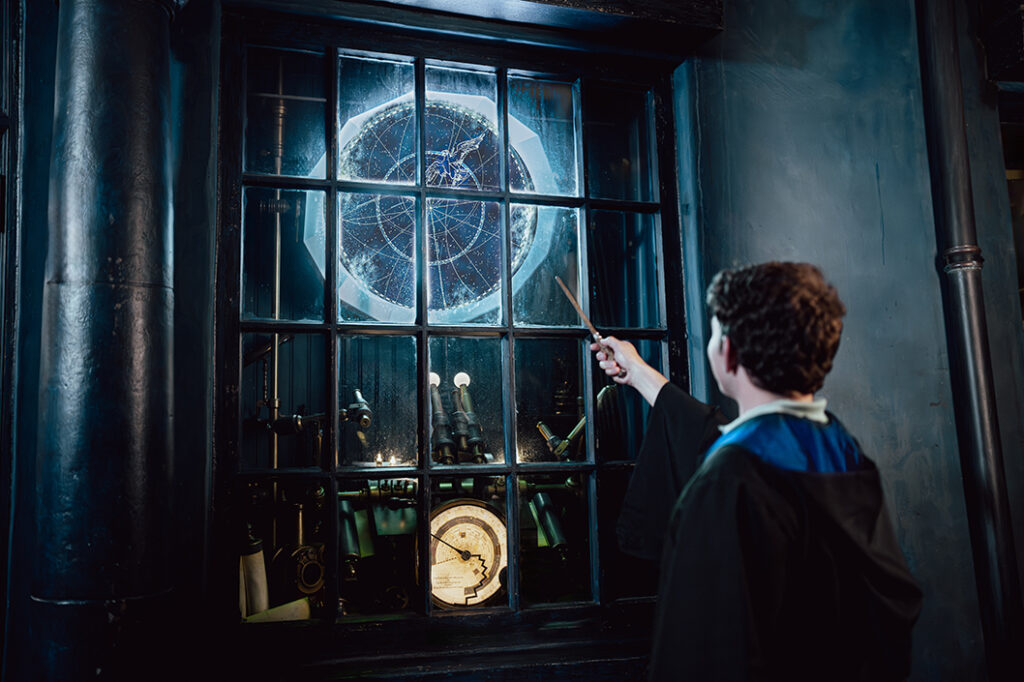
That means that once equipped, you are able to explore the Wizarding Worlds in search of bronze medallions embedded in the cobblestone streets, each instructing how to flick the wand and the spell to speak aloud. It may take a few tries, but mastering the moves will cause window displays to spring to life; chandeliers to light; doors to unlock; even activating fire and water effects hidden throughout the lands.
Meanwhile, the 2025 debut of Epic Universe’s Ministry of Magic introduced a second generation Interactive Wand (at the time of its release, a $20 premium over the old-fashioned first generation Wands, which are still available and constitute a vast majority of designs on offer) with “visceral spell-casting” (i.e. lights and haptic feedback) as well as the ability to pair with the Universal Play app, keeping track of your progress and unlocking new spells and skills as you advance. (The “second generation” wands also unlock a number of new “Adventures” – multi-stop mini-stories you advance through in each of the three lands, each culminating in a “finale” that will leave onlookers wishing they’d upgraded, too.
As for the value of the Wand in the signature, immersive, in-universe theme park retail space? One hesitates to say it, but actually, $65 to $85 feels like a relative bargain given how the wands bring the lands to marvelous and spectacular life. Sure, once you’re home, the wand probably goes back into its Ollivanders box and takes its dutiful place on your bookshelf or desk… but its still a handsome and conversational souvenir in that state, which is more than you can say about your popcorn buckets, right?
2. Pandora: The World of Avatar
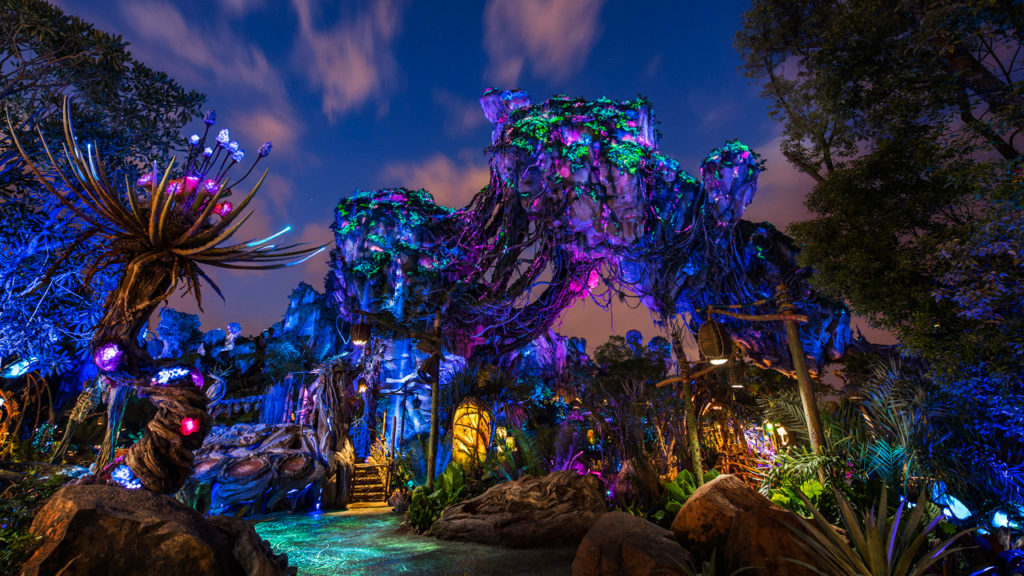
If you’ve been in the theme park fandom for long, you probably know that when Disney announced in 2011 that they had secured the global licensing to build theme park attractions based on the 2009 film Avatar, fan reception was strongly in the negative. The truth is, it probably isn’t a coincidence that Disney gobbled up the rights to Avatar (which had just broken all box office records) just as the Wizarding World opened down the street. Fans frame the decision as a “knee-jerk” response and Disney flailing to grab something – “anything!” – that seemed like it would be “Potter-sized.” The idea that a permanent land themed to a PG-13 sci-fi action movie from 20th Century Fox would take root in Disney’s Animal Kingdom was… kind of a bummer.
But of course, we should’ve trusted Joe Rohde, who led a team shepherding a World of Avatar into just what it needed to be. Severed entirely from the plot of the film (and set an indeterminate amount of time in the future from it), the land invites guests into a small portion of Pandora – the protected nature reserve of the Valley of Mo’ara, overseen by the Pandora Conservation Initiative. We arrive as “eco-tourists” who’ve come to learn from the culture of the native Na’vi people, indulge in their cuisine, and maybe learn a thing or two about the appreciation and connectedness they feel with the flora and fauna of Pandora.
One wonders how deep into development Disney got with Pandora before recognizing with a shudder that Avatar (and indeed, the themes drawn from it to build the land) are sort of inherently anti-commercial. A kind of antithesis to Hogsmeade, you wouldn’t come to the Valley of Mo’ara expecting a retail corridor. Of course, Disney Parks are sort of anti-anti-commercialism, meaning that retail experiences are sort of non-optional.
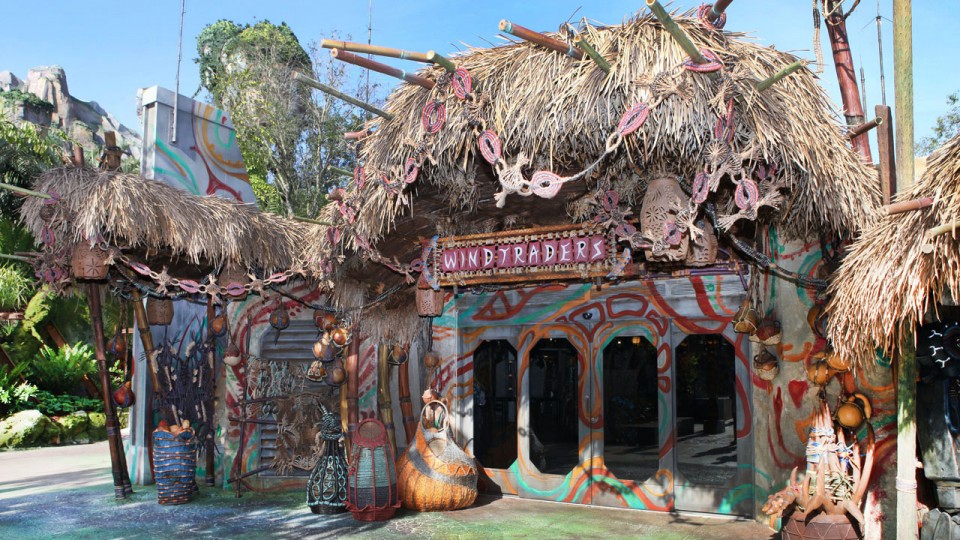
But Disney did work to infuse “in-universe” experiences throughout! A humble “Colors of Mo’ara” cart allows guests to be face-painted as a Na’vi. The land’s single gift shop – Windtraders (above) – displays an embedded history of how the Na’vi (with the help of Earth expats working for PCI) have reclaimed the former army bases of the villainous Resource Development Administration (RDA) from the film into a shop.
Windtraders offers products like Pandora Conservation Initiative apparel, classic souvenirs of Pandora, and science kits. You can also buy Na’vi weapons and staves and the curious ornamentation of Na’vi braids and tails – items that might border on cultural appropriation were it not that Na’vi are, y’know, fictional blue feline aliens. That also extends to another unique product for the land…
Banshees
PRICE: $90
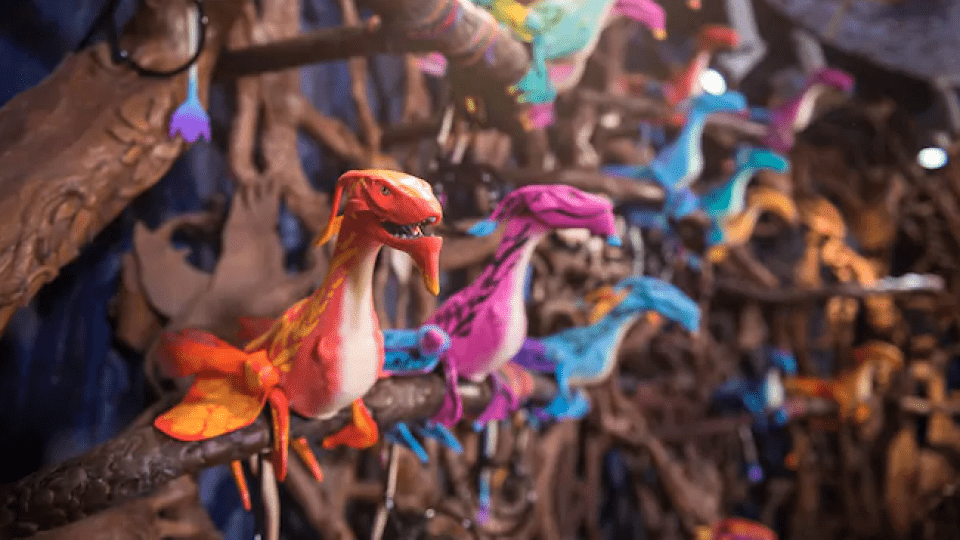
Banshees – known in Na’vi as “Ikran” – are the dragon-like creatures that inhabit “rookeries” high up in the floating mountains of Pandora. The queue for the land’s E-Ticket ride – Avatar Flight of Passage – is essentially an extended homage to the Ikran. Guests queue in ancient caverns where Na’vi pictograms tell of the creature’s role in a rite of passage wherein young Na’vi take to the skies on the back of an Ikran. Visitors then pass through PCI laboratories exploring the Ikran’s role as a keystone species upon which the balance of Pandora’s food chain depends.
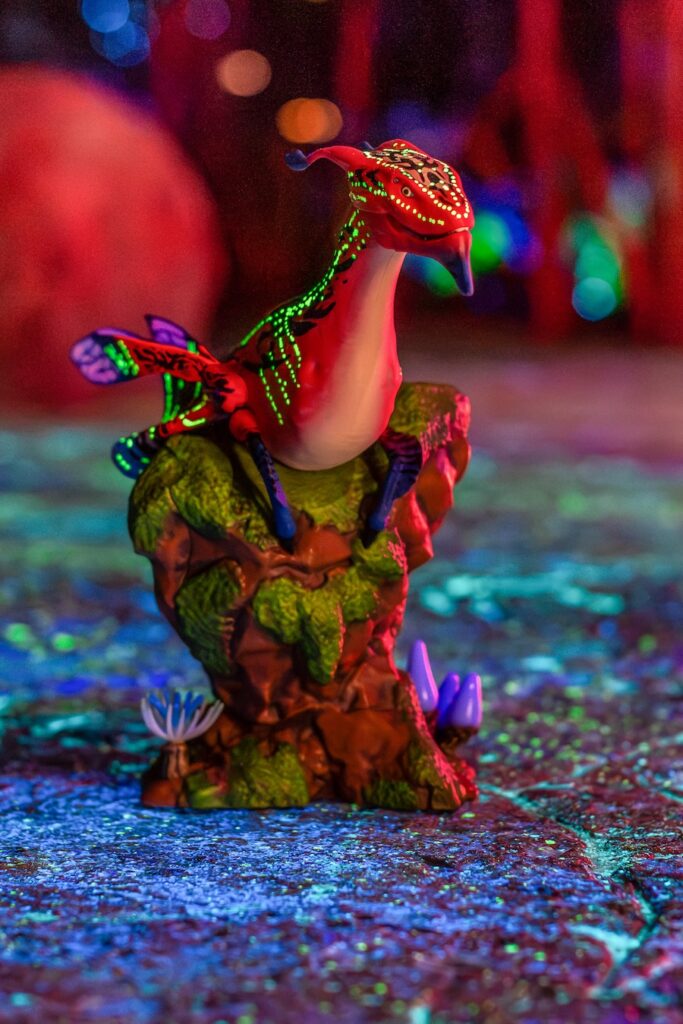
Anyway, having constructed a narrative and emotional connection to banshees, you may just be tempted to adopt your own – something that the rookery at Windtraders makes possible. Okay, so the banshees you can “adopt” in Pandora aren’t quite as large as the real things… but the “shoulder-riding” banshees do have some pretty amazing capabilities. They really are something like personalized animatronics, controlled via a wireless remote held by the user. The banshees react when touched on the back or chest; they move their head, flutter their wings, and open and close their mouths; and when in “communication mode,” they react to and converse with other nearby banshees. And of course, in true Pandora style, they’re bioluminescent, glowing under the land’s fabled blacklight after dark.
It probably won’t surprise you to hear that the banshee can also be equipped with various accessories, including armor packs inspired by clans from the Avatar films, sling-style carrying cases, and display perches (without which the banshee is likely to end up in a toy box once you’re home – a disappointing fate for a $90 souvenir).
If we’re talking value, it’s fair to suppose that the $90 Banshees are a bit of a hard sell. They actually cost a bit more than Universal’s second generation Wands, which essentially unlock an entire additional multi-hour experience and become discretely boxed collector’s items once you get home. The banshees, in comparison are quite “toyetic” in their appearance. Yeah, they’ll ride around on your shoulder for the remainder of your Animal Kingdom day, but will you put it back on the next morning for EPCOT? Probably not. Though the instantaneous and emotional appeal of the sweet little customizable banshees is high, it’s arguably got less long-term usefulness than others on this list.