
Sunset Blvd.
Background
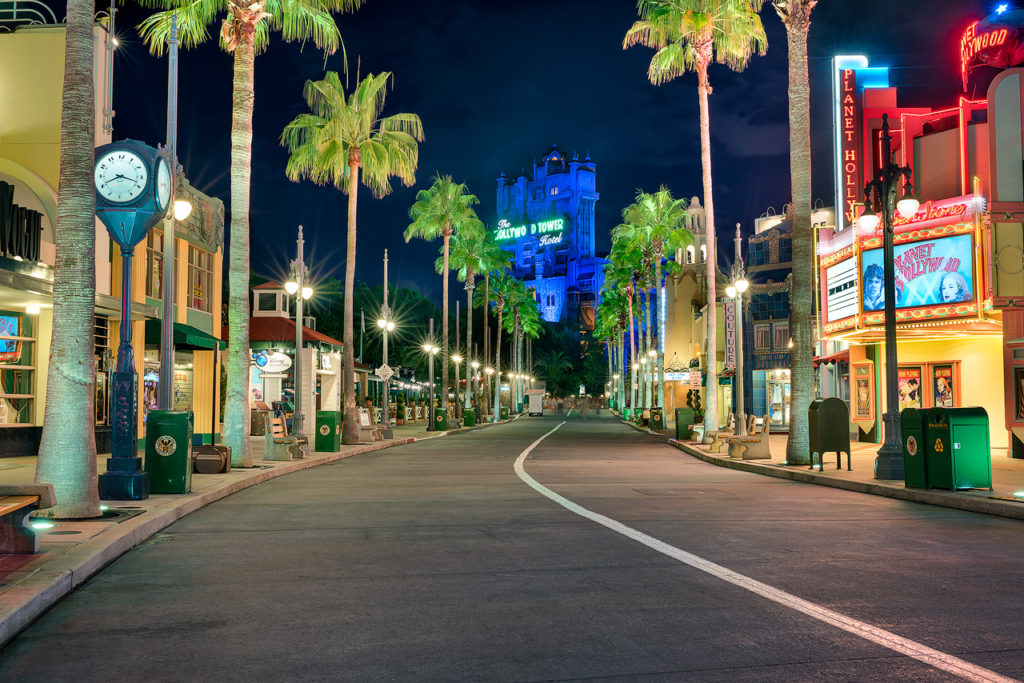
Sunset Blvd. officially opened in 1994 as part of the then-Disney-MGM Studios park’s need to add more capacity. The quickly-constructed studio park was far more popular than expected, and a Sunset Blvd. expansion was on the roster even when Imagineers weren’t sure what would inhabit the creepy abandoned hotel at its end.
Operationally, Sunset Blvd. has some issues. First, it’s a dead end with one entrance and one exit whose farthest point serves as entry to two E-Tickets and a very, very popular nighttime show, creating crowding and confusion. Even worse, Disney hastily constructed a very large “Sunset Showcase” flex space that can only be accessed by walking through the courtyard of Rock ‘n’ Roller Coaster… Just odd dead-end nesting all the way through.
Narratively, it also has a problem. Though the 1940s Hollywood setting is a great and logical continuation of Hollywood Blvd.’s and the “Sunset” name here is an appropriately ominous lead-up to the Hollywood Tower Hotel, the rest of the street suffers from “California Adventure Syndrome.” That is, it looks like a wonderful, historic Hollywood streetscape, but is populated by Beauty and the Beast, Mickey Mouse, Cars, and Aerosmith.
Brace yourself as I try to fix both…!
Build-Out
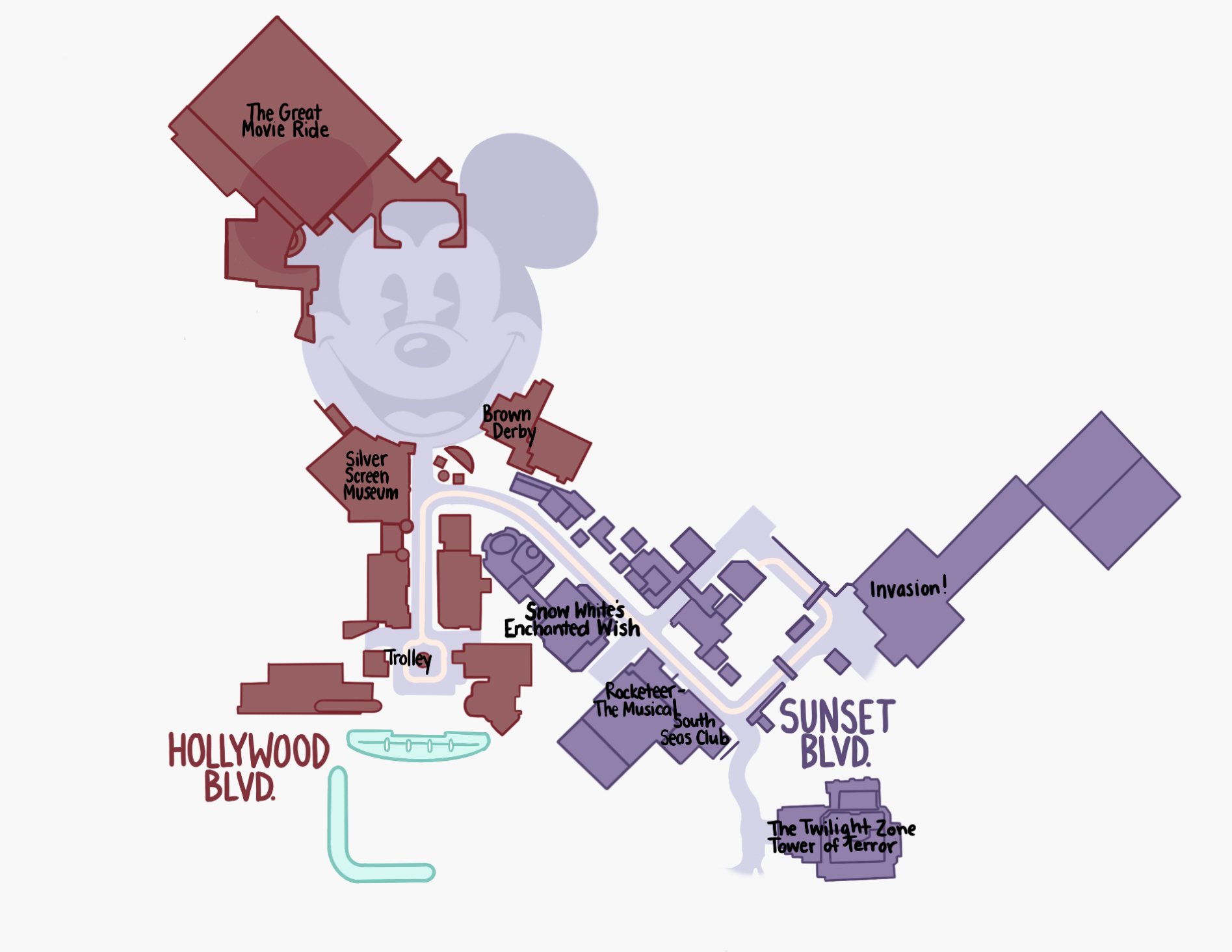
First, let’s talk narrative. I know this would be absolute blasphemy to be spoken aloud at the modern Walt Disney Company, but there’s really no reason that a land like Sunset Blvd. couldn’t reasonably, realistically commit to a timeline and style guide – just as we’d expect Avengers Campus or Frontierland to. In other words, it’s actually not that hard to keep Pixar out of a 1940s Hollywood Blvd. if you just try.
Obviously, THE TWILIGHT ZONE TOWER OF TERROR would remain as the anchor of this land, still looming over Sunset Blvd. Obviously, its narrative gravity should pull all else in this land, not unlike Disneyland’s Indiana Jones Adventure resetting the aesthetic of all of Adventureland to a 1930s pulpy Southeast Asian bazaar. At a glance, Sunset Blvd. meticulously lends itself to a fully-immersive 1940s Hollywood, so we need only make some logical fills to make the substance match the style.
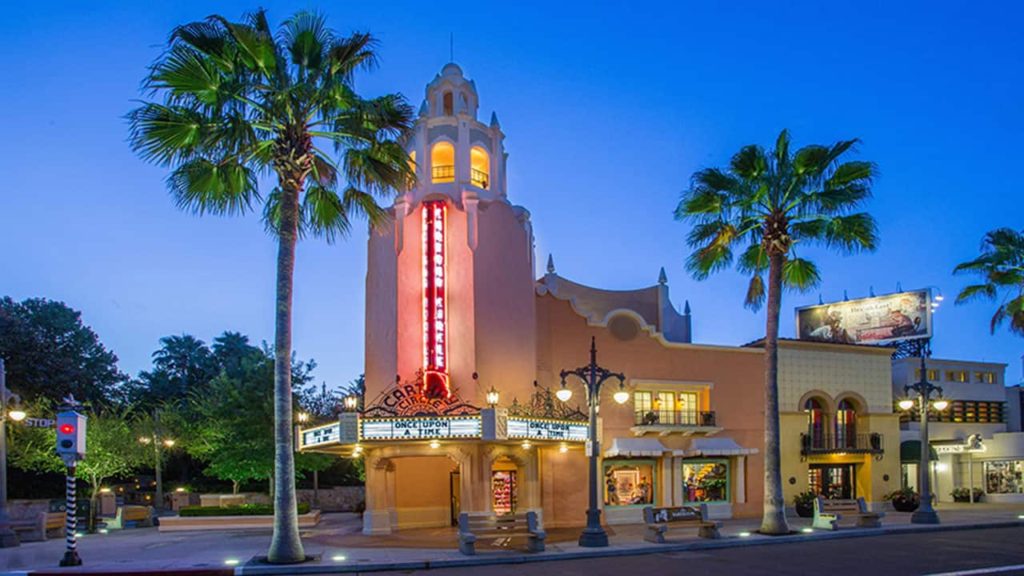
For example, Sunset Blvd. already contains a scaled recreation of the Carthay Circle Theater – a fabled Hollywood movie palace so important to Disney history and so lovely to look at that it’s actually the park icon of Disney California Adventure. Here, it’s reduced to somewhat of an oddly-proportioned, stretched-and-skewed, forced-perspective version of itself painted a dark Tuscan beige, which I would like to correct if only because the Carthay deserves better.
Likewise, it’s a shame that Florida’s recreation of the Spanish Colonial Revival-stylized tower is populated by a gift shop. The One Upon a Toy toy shop and the adjoining Mouse About Town retailer that make up this “block” of the street can be combined to create a good-sized building, and kicking out the back wall for an expansion would actually provide a substantial little space for more.
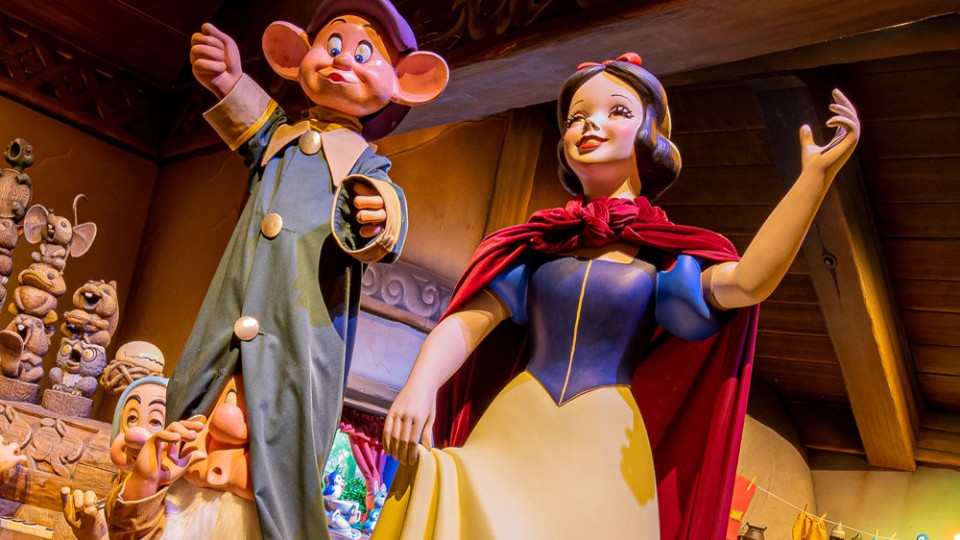
So I decided to make the Carthay home to SNOW WHITE’S ENCHANTED WISH – a much-needed Fantasyland-style dark ride for the park, and a chance to reintroduce the shuttered Lost Legend: Snow White’s Scary Adventures from Magic Kingdom with Disneyland’s 2021 update. Given that the Carthay famously hosted the 1937 premiere of Snow White – the first full-length animated film ever, and Walt’s greatest risk – it seems like a perfect match.
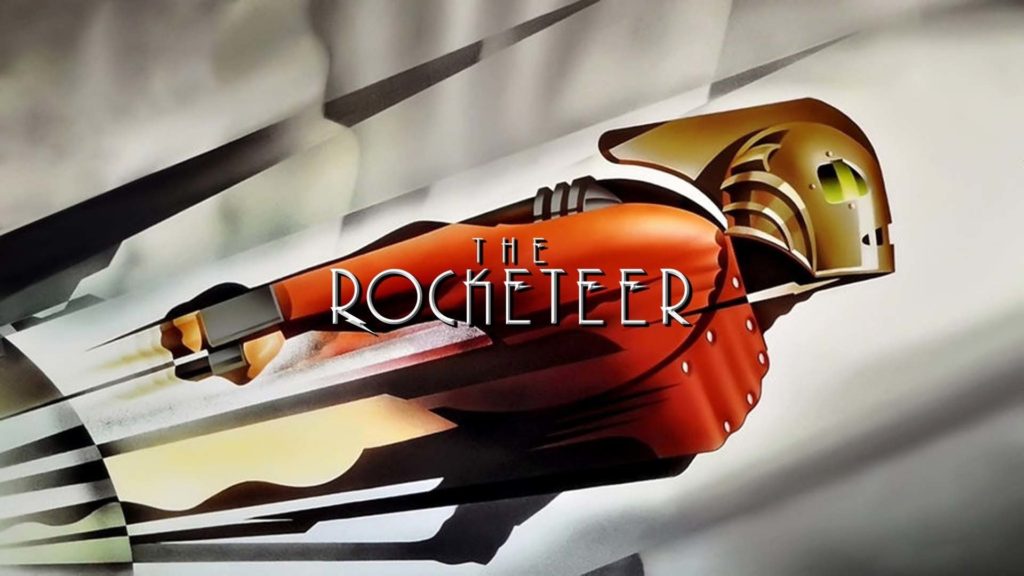
Likewise, I’ve gone ahead and replaced the outdoor Theater of the Stars with a new, 2,000-seat Broadway-ready theatre, which I’d use to house ROCKETEER – THE MUSICAL! Disney’s cult classic 1991 superhero film wasn’t appreciated in its time, but man is it a gem. Set in World War II Hollywood, the film is a mix of superhero, noir, steampunk, action-adventure, and art deco, and translating it into a 45-minute special effects spectacular and musical just feels like the weirdest, coolest treatment.
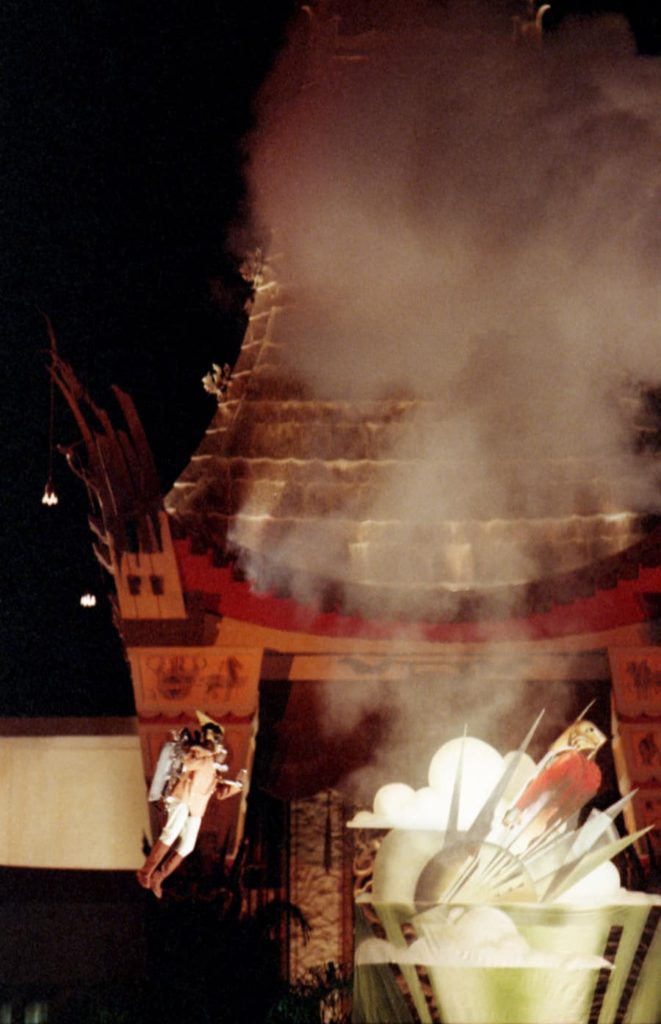
Fun fact: it’s also a return to the park for the Rocketeer. Coinciding with the film’s 1991 premiere, the Rocketeer actually took flight in front of the Chinese Theater as part of a limited time Sorcery in the Sky update. Even though the film had a disappointing box office run back in 1991, Disney Junior’s The Rocketeer animated spin-off series offers that this (as a BBC reviewer put it) “airborne Indiana Jones” isn’t a dead property, but actually has franchise-potential…
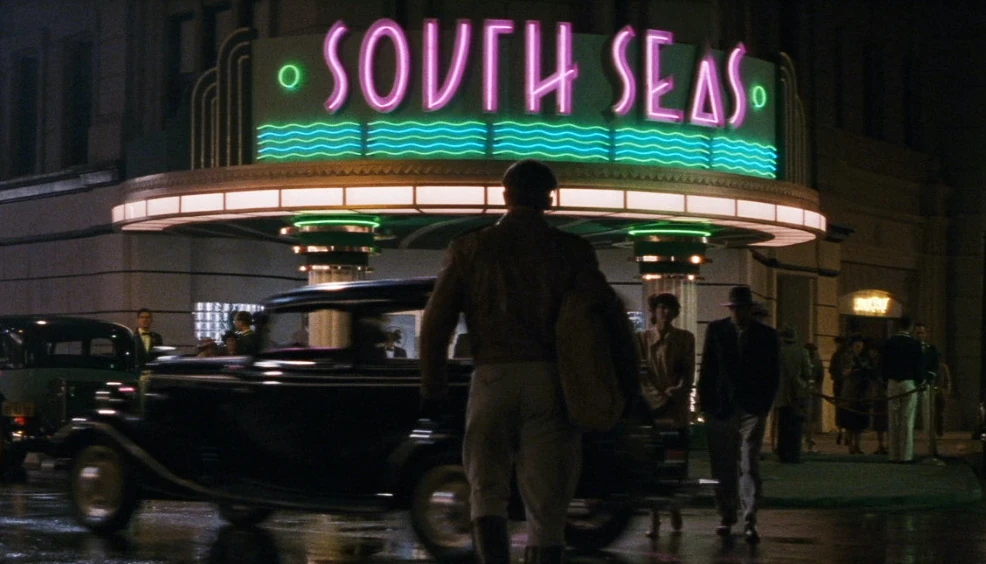
In keeping with that theme and timeline, I added an adjoining SOUTH SEAS CLUB – the nightclub seen in the film. I sort of envision this as a “quick service by day, table service by night” experience brought to life with lounge singers and jazz acts… perhaps with a second story bar (a rebirth of the park’s Catwalk Bar) open even as the restaurant itself switches styles.
As a final change, I’ve gone ahead and addressed the Rock n’ Roller Coaster problem. Frankly, this launched indoor coaster is badly placed. It takes up a strange section of real estate that prevents the park from expanding into otherwise-obvious expansion pads, and it necessitates a very, very tall and conspicuous showbuilding that’s disguise as anything but the big warehouse it is. So to be honest, the smart move might’ve been to just eliminate this ride entirely or (if we’re being fully “Blue Sky”) move it. But in my attempt to be at least reasonably realistic here, I decided to keep it. But with a change…
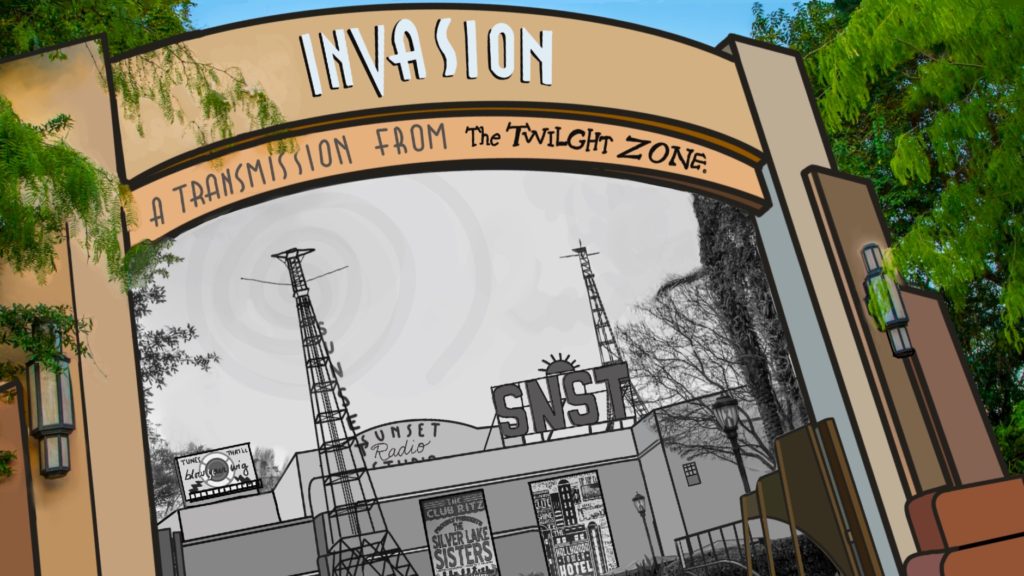
Separately from this park wide reimagining exercise, I actually developed a period-appropriate overlay for this ride before. So this feels like the perfect place to roll it out into the bigger picture reimagining. I called it INVASION! A so called “Transmission From The Twilight Zone,” this relatively simple overlay of the existing ride would see guests come to Sunset Radio – a 1930s radio station reigned over by metallic antenna towers.
Inside, guests would find themselves as the legendary 1938 broadcast of the radio drama adaptation of H.G. Wells’ War of the Worlds. As urban legend goes, listeners across the nation mistook Orson Welles’ immersive radio drama for the real news, believing that alien invaders had indeed made landing on the East Coast and setting off mass panic in the streets.


While the veracity of the story is debated, it makes for a compelling start to a thrill ride when, ushered out of the radio studio with Welles wondering aloud if “anyone will buy it,” we’re launched into an otherworldly thrill ride of the imagination as the real sounds of the radio broadcast launch us into a wild ride. Halfway through the experience, ten-foot tall incandescent bulbs would illuminate the interior of the coaster’s “spaghetti bowl” of track, revealing that in actuality, we were inside a radio, swirling around like the electrical connections powering the broadcast.
That would make this version of the ride not only an allusion to a real, historical event and a peek behind the curtain on Foley effects, but an “in-universe” (and kinda “out-of-universe”) experience that would be a little heady, a little weird, and a big thrill. Rod Serling’s voice would greet us on the final brakes: “Around and around she goes, and where she stops, nobody knows. What happened here is yours to be believed or disbelieved. One way or another, if you’re seeking something strange, you can find it through a strange and wonderful machine called a radio… tuned to the Twilight Zone.”
Altogether, I think that serves to do something unique to Sunset Blvd.: to actually focus it all on the same timeline. Every allusion in the land would be rooted in real films, pop culture, and stories set in the period from 1937 to 1939, which I think is a pretty amazing feat to still result in such a varied and exciting lineup. And actually, continuing with that classic Hollywood theme, a third land – and our first from-scratch new land – emerges… Just take the road that runs alongside the Carthay and you’ll find yourself in a whole new part of town…
Hidden Hills
Background
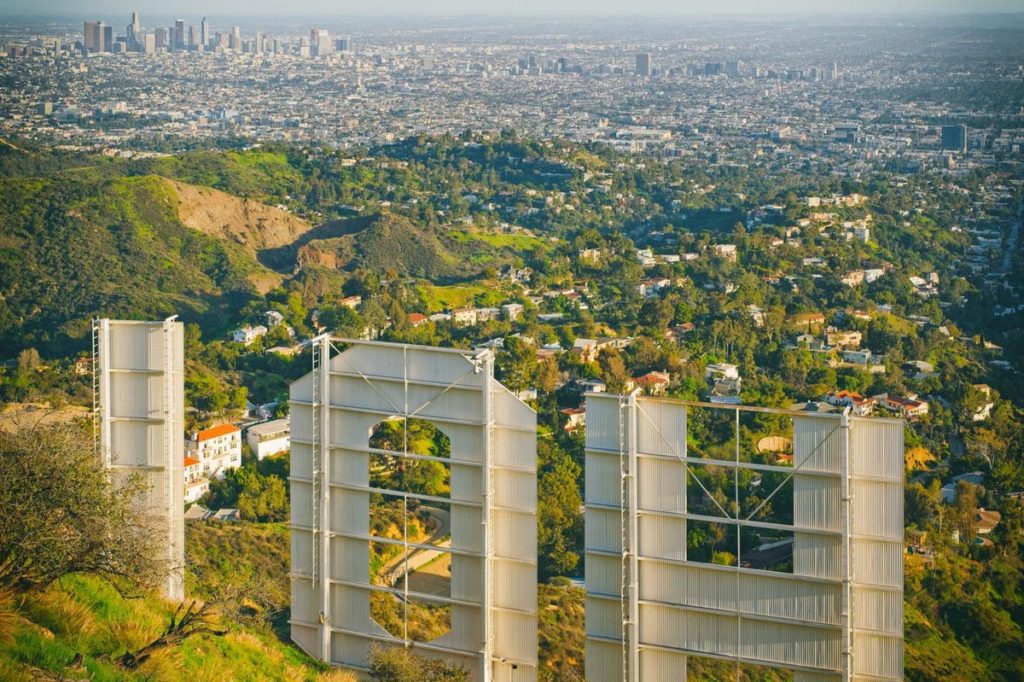
Hidden Hills is an entirely new land for the park – and in fact, it’s a mini-land contained entirely on one of the two arterial pathways that connect to the Fantasmic stadium. (In other words, Fantasmic could survive this land being built.)
Hidden Hills really is one of the elite gated communities you’ll find in Los Angeles, tucked away in the Santa Monica Mountains. (Countless celebrities – including Madonna, Jennifer Lopez, Britney Spears, Will Smith, Jessica Simpson, Kanye West, and nearly every individual Kardashian have owned homes there.) But my version largely just uses the name to take us to an elite, forested community of Hollywood that never was, but always will be; sprawling estates, luxurious homes, and the historic manors of stars of the silver screen…
So as the streetscape of Sunset Blvd. gives way to the beautiful, green, lantern-lit grounds of Hidden Hills, we stumble on the estate of a genuine Hollywood legend…
Build-Out
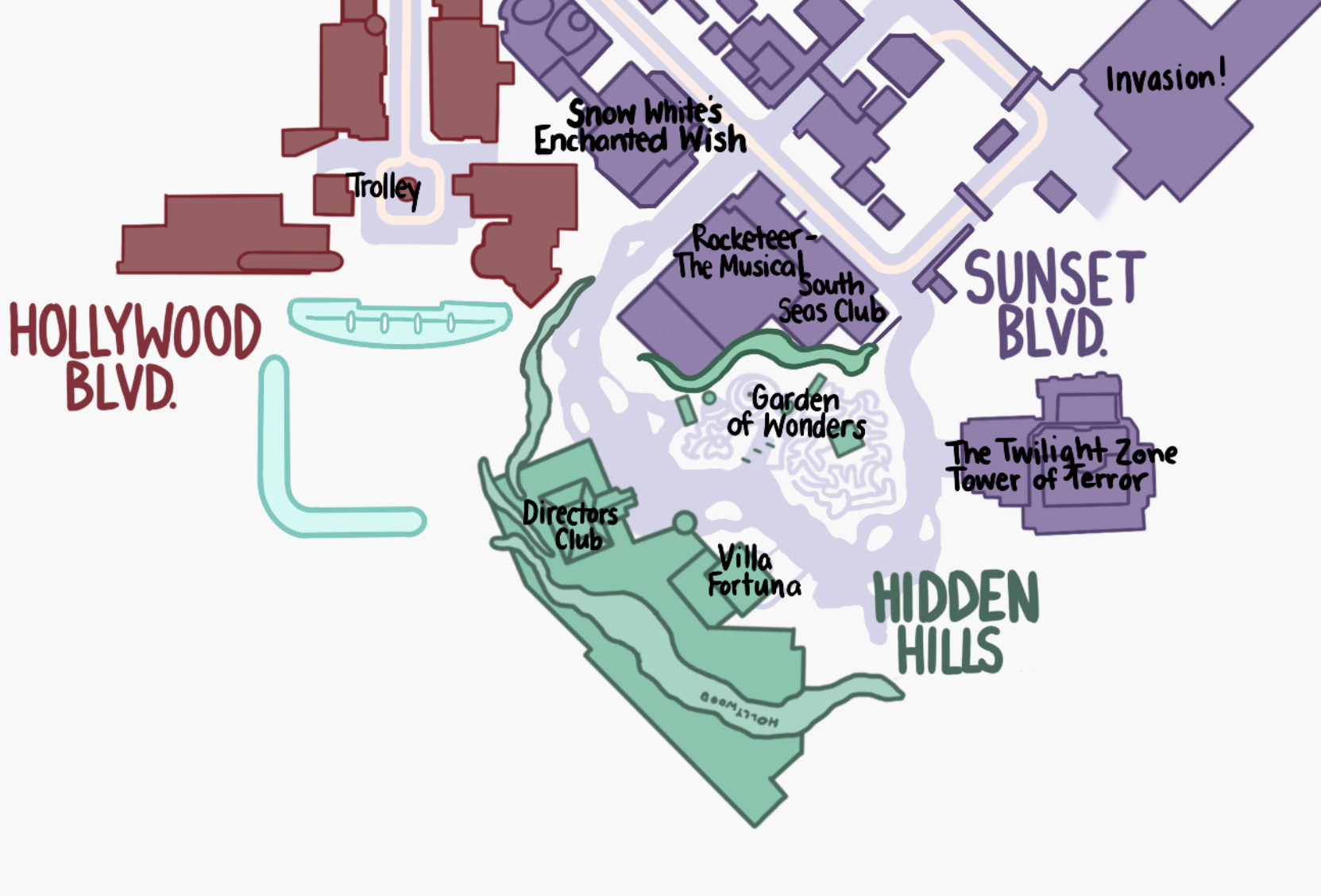
One of the oldest and most intriguing homes in Hidden Hills is that of Hollywood starlet Luna Fortuna; a long-retired but still-beloved actress from the Golden Age of Hollywood. Though she’s now retired to her home – VILLA FORTUNA – in the comfort of Hidden Hills, Luna is a star at heart and has opened her home to the public to tour the countless props and artifacts she’s been gifted from film sets across her illustrious career.
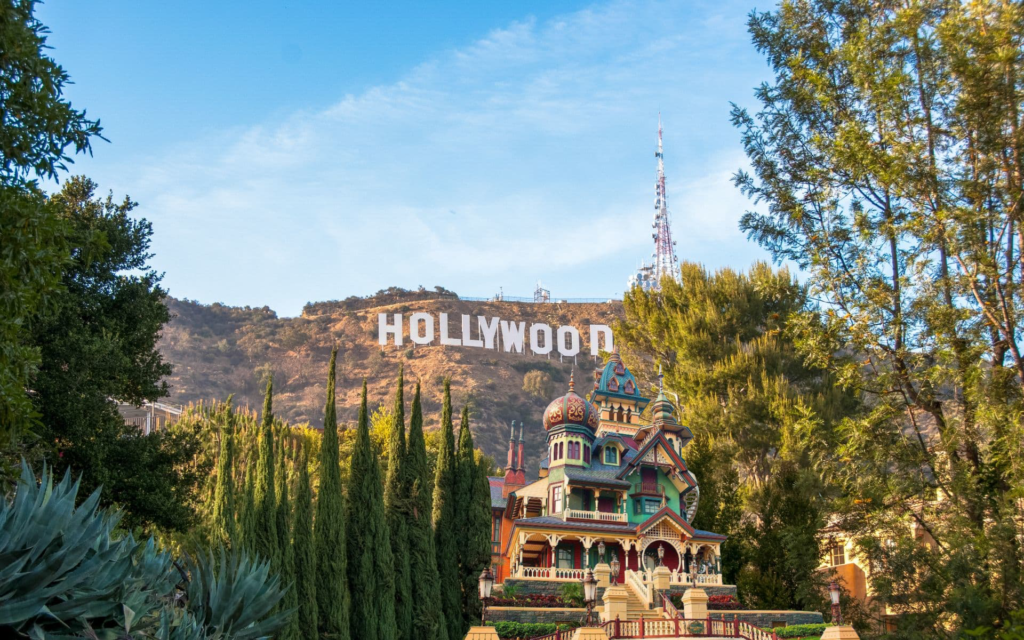
By now, you can probably tell that Villa Fortuna is my way of bringing Imagineer’s most jaw-dropping Modern Marvel: Mystic Manor to Walt Disney World. Stepping into Fortuna’s grand and glorious estate, she would welcome us to her home, recalling her days in front of and behind the camera of some of Tinseltown’s most legendary films.
Of course, when her playful tabby cat George accidentally kicks on an enchanted film projector packed with clips of Luna’s heyday, its decades of accumulated “stardust” would spill out, carrying us through the home and awakening Luna’s prop collections… from pulp adventures to creature features; sci-fi classics to historical dramas. A musical, madcap, movie-themed dark ride, this Hollywood-ized version of Mystic Manor would just be an instant classic and a perfect fit for the park.
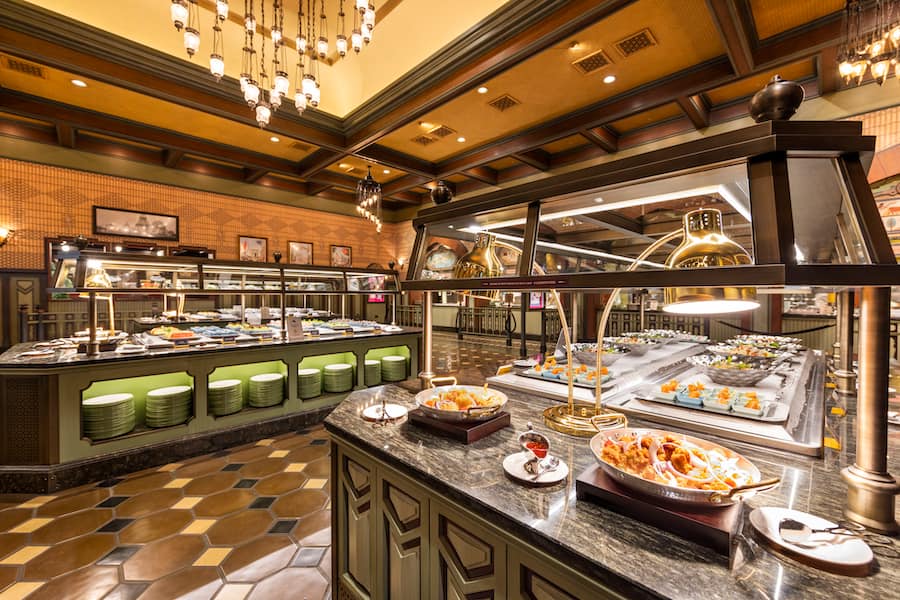
To build out this mini-land, I also added the DIRECTOR’S CLUB restaurant – a quick service eatery packed with “in-universe” film memorabilia. This would, of course, be a variant of Hong Kong’s Explorers Club. But the great thing is that the antiquities-themed rooms of that restaurant translate well to particular archival collections you might expect of a high-end Hollywood soiree – a pretty clean way to bring more of Mystic Point back to Orlando as Hidden Hills.
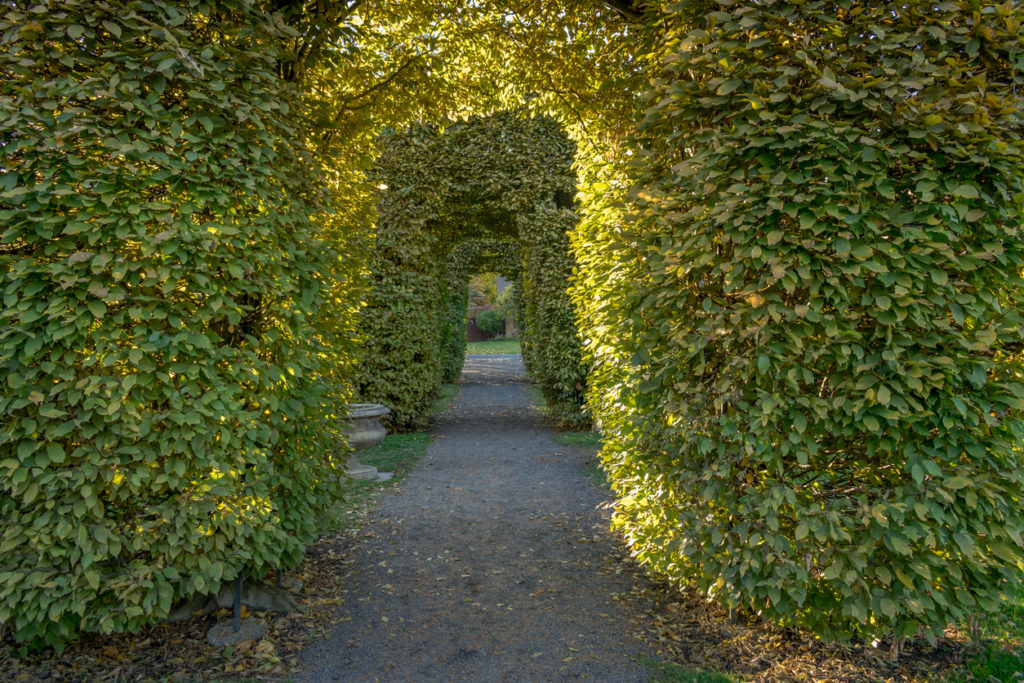
Finally, completing the mini-land, I added the GARDEN OF WONDERS – an outdoor walkthrough hedge maze nestled into the hills on the estate, containing props, interactives, and special effects too large to fit into the Villa itself, ending at an enchanted wrought iron greenhouse with lookouts across the property.
As you can see, the winding, lantern-lit paths of this upscale, new money estate connect back up to the Hollywood Tower Hotel. But the entrance to the land next to the Carthay has also been extended as a cross street that continues on into a whole new land… Read on…
What ride system are you thinking of for The Great Muppet Movie Ride? Also wanted to know how a new (I’m assuming A-Ticket) would go into a space roughly the size of Muppet*Vision.
First of all, I’ve just discovered your site and I’m really enjoying your build outs! I first read your DCA one and made a suggestion that Disney’s actual Hyperion Studio be the “weenie” at the end of Hollywood Blvd. (which I suggested could become Disney’s Animation Avenue). Then I saw this build out and…there’s the Hyperion Studio. Love that.
I am amazed that Disney hasn’t recreated this company landmark, the aesthetics alone justify it, let alone the history. Yes, the Carthay Circle was important, but it wasn’t Disney’s. And the Chinese Theater is even more unspecific to Disney. Seeing them now take inspiration from the Robert Stern animation building at DHS (in the former Animation Courtyard) makes a recreation of the Hyperion Studio a great next choice.
You’r neighboring Encanto/Indy combo seems prescient by the way!
Thanks so much! Good to see you again, and again I’ll say how much it means that you actually read these very lengthy and detailed walkthroughs! Haha! Yes, when they announced that the old Animation Courtyard was becoming “Walt Disney Studios” I did a double take. It’s a shame they didn’t fully commit by recladding the area like the Hyperion Studio. I appreciate the Stern-style sorcerer’s hat and post-modern embellishments (which are also on the “Art of Disney Animation” building in Paris).
And it looks like they’re going to integrate some love letters to the real hand-drawn Animation process into the meet-and-greets, so hopefully that carries through the interior. It’ll be an interesting middle ground that highlights the continued conflict between seeing “behind the scenes of the movies” and “stepping into the movies”… that sort of thing where the park is called a Studio, and has some studio architecture, and some studio mindsets, but wishes that it didn’t. So we get to visit what looks like the Roy E. Disney building, but it contains an Alice in Wonderland playground. And meet-and-greets that nod to the multi-plane camera, but where we meet CGI characters. Fascinating stuff!
I wonder, given the Animal Kingdom buildout including Tropical Americas, Disney bulldozing Muppet Courtyard, Rock n Rollercoaster being rethemed into Muppets, and the recent Animation Courtyard plans, how would that affect this build-out?
Great question! This has always been a Build-Out I don’t feel 100% happy with – probably because ultimately, I wasn’t able to solve the park’s core issue, which is that it doesn’t make sense that it flips back and forth between “idealized historic Hollywood” and “immersive, modern IP Living Lands.” I’m not sure if there’s a “reasonable” solution, because I wouldn’t ever imagine getting rid of Hollywood Blvd. or Sunset Blvd., but you also can’t ever really get rid of Galaxy’s Edge, so you’re always going to have to work around the incongruous parts that somehow need to come together.
Likewise, I was really hesitant about expanding onto the parking lot or removing backstage facilities to expand the park’s overall footprint because doing that might’ve teetered this into the territory of pure fiction. It felt like “Well, if I expand in the parking lot, it’s like throwing out the rulebook so at that point, why adhere to reality at all?” But now that Disney itself is doing that, it does make me want to return to this from that perspective, too, and play with the bounds of what space can be developed.
So long story short, this Build-Out probably didn’t age well; the rulebook I used is no longer the rulebook in play; and a lot of the ideas I had are either now out-of-sync with reality or, weirdly, becoming real in modified ways. Maybe that’s an excuse to re-do this and approach it from a bit of a new direction! I also feel like I’ve gotten a lot better at this since I did this build-out, so maybe a fresh start would be a win-win. Stay tuned! Hahha.
Hi! When’s the next part of the tour going to happen? It’s a really good park!
Ahh! Thanks for the reminder! Haha. I got distracted by the holidays, but the second half is up! Be sure to stick around to the end for the final map with all the layers of foliage and texture added. Thanks for checking it out!