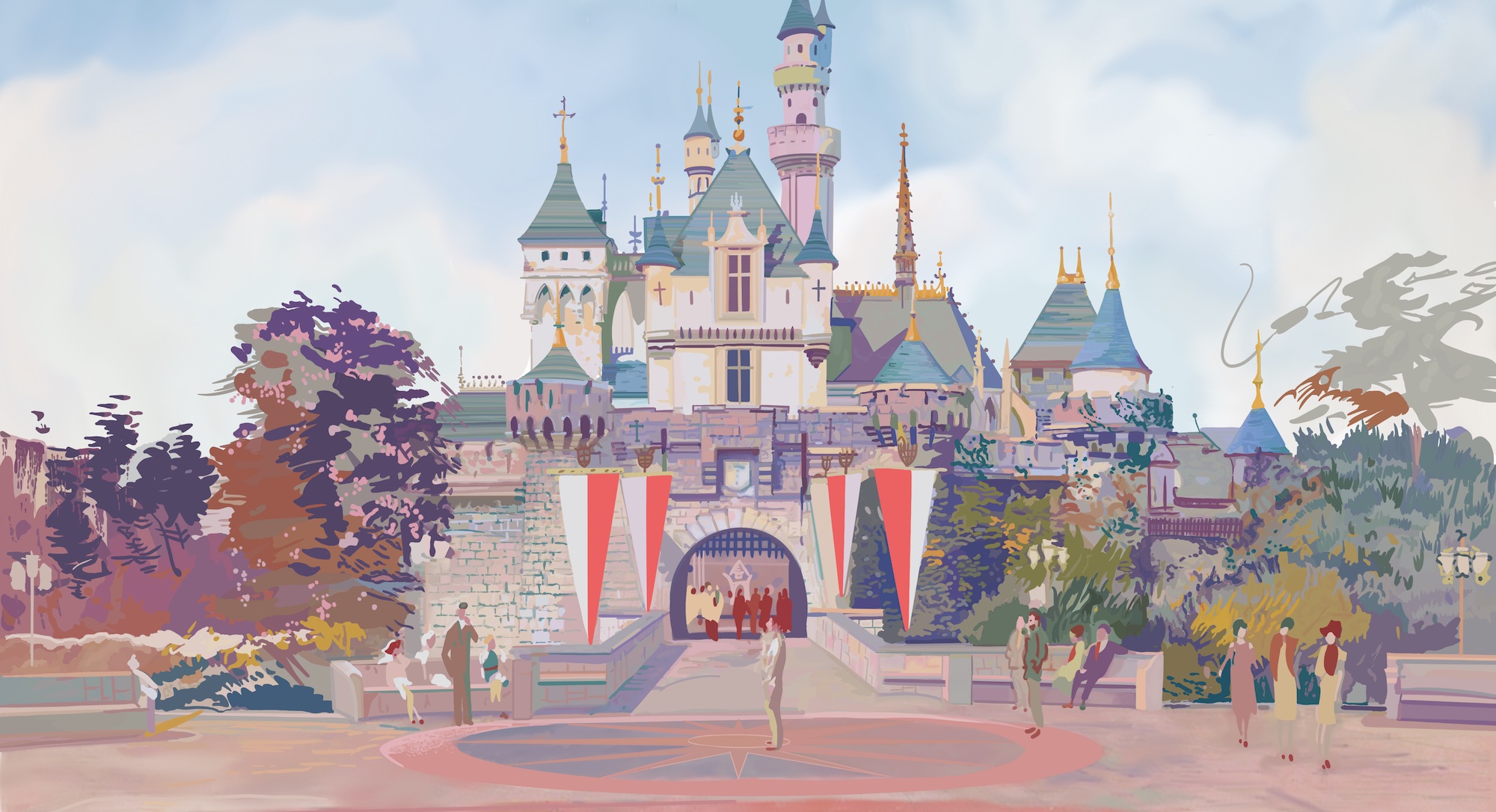

“Here you leave today…” Since Disneyland opened in 1955, that simple invitation has served as a de facto mission statement for Disney’s “castle parks” around the globe. From Anaheim to Shanghai, each subsequent “Disneyland” has evolved in its methods and cleverness, but always revolved around that same essential idea: whisking guests away from the world they know and into the worlds of “yesterday, tomorrow, and fantasy.”
At their core, it’s been said that Disney Parks trade in the “architecture of reassurance” – of physical, built places that are steeped in romanticism and idealism; hints of the world we know, but swirled with rose-colored visions of the world as we wish it would be.
Walking right down the middle of a glowing, incandescent Main Street, U.S.A. of ice cream parlors, streetcars, and fresh popcorn; torch-lit Adventurelands drawn from the pulpy exoticism of yore; epic ideals of an Old West that never really was, but fits to a T with the western Frontier we’ve learned to imagine; utopian Tomorrowlands of mass transit and forays into the universe… And through it all, you’ve likely had one persistent thought repeat again and again in your mind: “I only wish I could leave this storybook nonsense behind and get back to reality.”
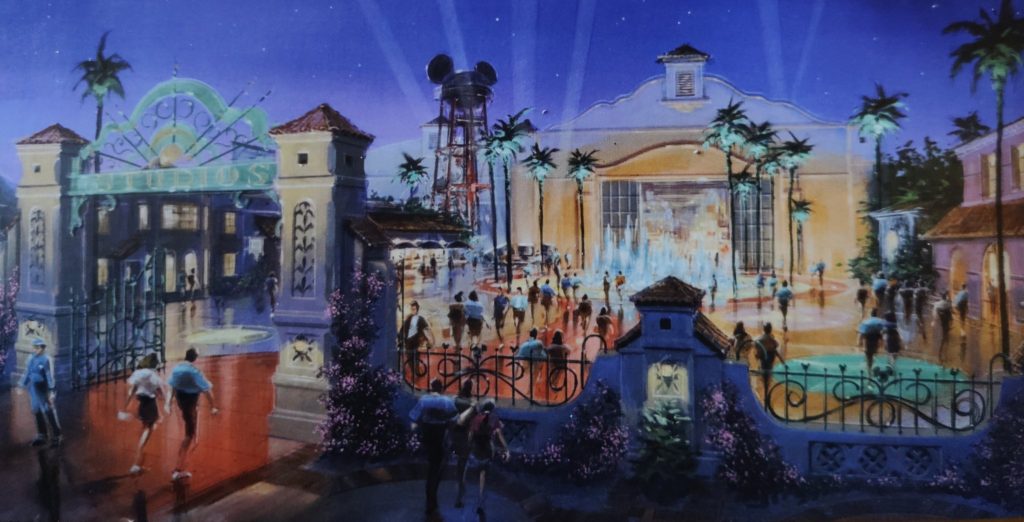
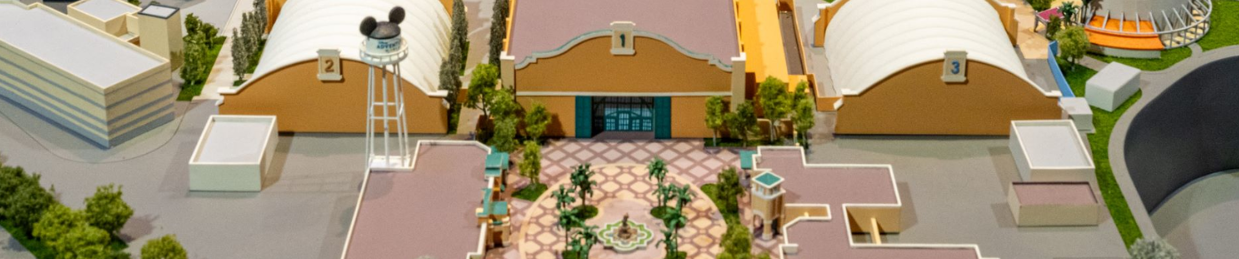
At least, that must’ve been what Disney’s executives imagined when they commissioned the construction of Disney’s most disastrous theme park ever; a park that dispensed entirely with immersion, fantasy, and romance in favor of blistering blacktop, metal lighting rigs, electrical poles, and big, boxy, beige soundstages. Less a celebration of Hollywood’s storied past and more a trip to an empty industrial backlot, Walt Disney Studios Park at Disneyland Paris was nothing short of a box office bomb.
For a quarter century, the very existence of Walt Disney Studios is one of those realities that all Disney Parks enthusiasts have quietly agreed that the rest of the world can not know about. Discussed only in hushed tones and whispers, the park has permanently occupied last place in Disney’s portfolio. Will a cinematic reboot under a new name change that? We’ll explore the possibilities together, but first, let’s go behind the cameras to understand the box office bomb that will forever be Walt Disney Studios Park…
And before we head off, remember that you can unlock rare concept art and audio streams in this story, access over 100 Extra Features, and recieve an annual Membership card and postcard art set in the mail by supporting this clickbait-free, in-depth, ad-free theme park storytelling site for as little as $2 / month! Become a Park Lore Member to join the story! Until then, let’s start at the beginning…
In medias res
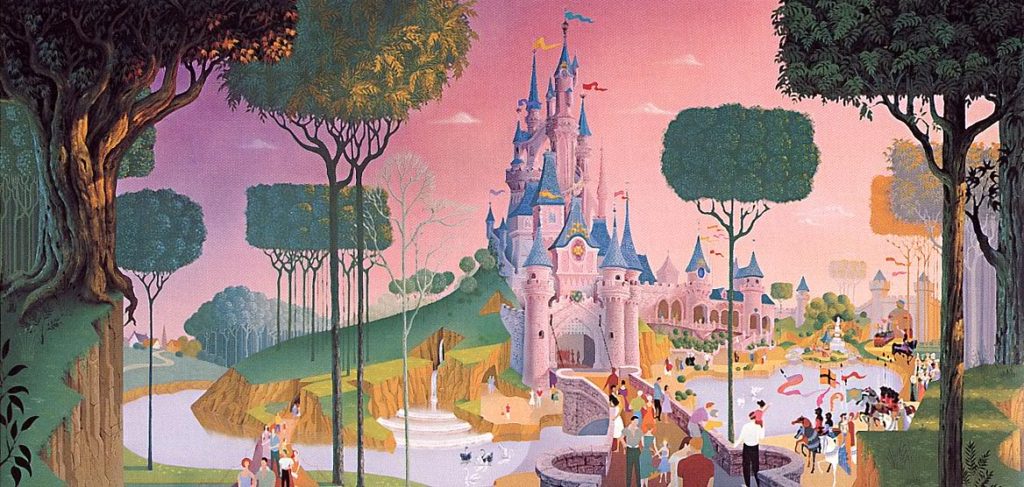
Imagine if you will, that you are among the first visitors to (as was known at its 1992 opening) “Euro Disneyland.” Here, you’ve been told, is the crown jewel of Disney theme parks. The pet project of Disney’s still-fresh and wildly ambitious CEO Michael Eisner in the midst of his “Ride the Movies” resurgence, this Disneyland is said to be the most lavish, extravagant, and spectacular of all, befitting the history and romance of the continent. And it is.
Euro Disneyland has done the impossible – it’s captured the warmth, intimacy, and storybook scale of the original park in Anaheim, and blended it with the efficiency, grandeur, and E-Ticket mindset of Magic Kingdom. This is a park built not of asphalt and fiberglass, but of stone and wood. Legendary artisans of historic crafts – real blacksmiths, leatherworkers, and glassblowers – have hand-built every nook and cranny. No expense has been spared, and there can be no doubt that this park really is the most beautiful one Disney has ever created.
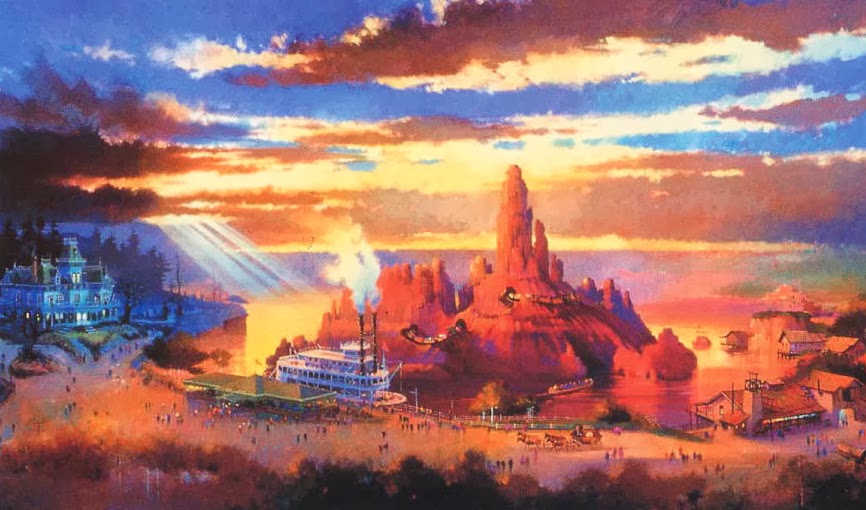
And better still, Imagineers have done the unthinkable: they’ve actually made the distinctly-American concept of Disneyland feel right at home in Europe.
The names of rides and lands may sound familiar for fans of the American parks, but here, Imagineers have skillfully refined each to fit beautifully in the continent from which fairytales were born – a sprawling, garden-like Fantasyland reflecting the European influence of Disney’s characters; a retro-futuristic bronze Discoveryland paying homage to great European thinkers like H.G. Wells and Jules Verne; even the park’s Frontierland passes its ode to the American West through the a cinematic lens, envisioning it as a Western epic steeped in dark, gothic romance. Euro Disneyland is a masterpiece.

Sure, you may have needed to pass through a blockade of angry French farmers protesting American trade policies, striking Cast Members angered by hiring, costuming, and behavior requirements they deem “American imperialism,” or a crowd of protestor-poets declaring the park a “cultural Chernobyl” to get there… But once inside, there’s no doubt that Euro Disneyland is a lovely place that sets a new bar for what a Disney theme park can be.
What a typical visitor to Euro Disneyland may not have understood are the seismic personal, political, financial, and corporate machinations that had been required to make Disney’s European property a reality…
A New Disney World

It’s really no wonder that then-new CEO Michael Eisner had had international expansion on his mind from his early days at Disney. When he stepped into the company in 1984, Eisner inherited a Disney in disarray. Mired in what we now call the “Dark Age” of the company, Disney was considered a tarnished brand whose best days were long in the past…
Via James B. Stewart’s DisneyWar – a 608-page definitive tome on the subject – we know that Eisner’s hand-selection by a rogue subset of Disney’s Board of Directors was orchestrated precisely because the former Paramount Pictures executive had the blockbuster chops to turn it around. And of course, he did, launching Disney into the pop culture stratosphere through the late ’80s and early ’90s. But behind the flashy E-Tickets and big budget stars of the “Rides the Movies” era or the immense heights of the Disney Renaissance, one of the quieter revelations that sparked Disney’s international curiosity was a revolutionary reframing around the potential of Disney’s destinations…
One of the early mandates assigned to Eisner by the activists who’d orchestrated his “white knight” ascension to Disney’s CEO was that Walt Disney World (just over a decade old, mind you) needed to grow. Other than the addition of EPCOT Center (a financial boondoggle that Eisner would need to address eventually), Disney’s Florida property looked a whole lot like it had a decade earlier – the same four hotels, the same sleepy shopping village, and the same old-fashioned “good neighbor” principles wherein Disney tried hard to avoid stepping on the toes of local attractions, restauranteurs, and hoteliers by, y’know, competing.

Under Eisner’s leadership, that would change. In less than a decade, Disney dipped its toes into once-improbable experiments as vast and varied as Pleasure Island (part of a modernized Downtown Disney), The Disney Institute, DisneyQuest, Disney Vacation Club, Disney’s Wide World of Sports, Typhoon Lagoon, Blizzard Beach, and Disney’s Boardwalk – all designed to box out competitors, lure conventioneers, eke out additional vacation days, and deepen per capita spending.
And then there were the hotels, expanding Disney World’s on-site offerings from four to fourteen in the eight years between 1988 and 1996 – and importantly, bringing “Value” and “Moderate”-priced entries directly aimed at Orlando motels… The “Disney Bubble” had arrived.
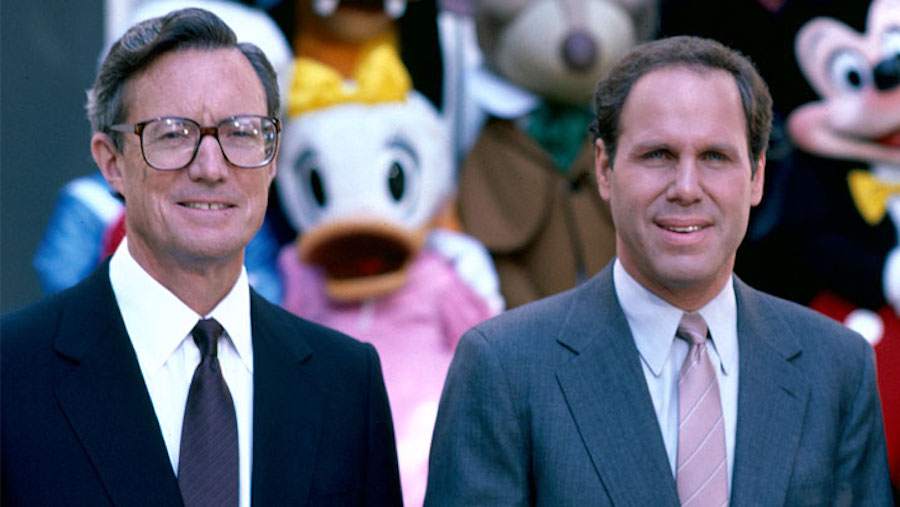
But more to the point, Michael Eisner – who’d been admittedly naive about Disney’s theme park division when he started – had found a new playground of limitless potential. Against the objections of longtime executives, Eisner approved price increases across Disney’s theme parks in the mid-’80s. As James B. Stewart puts it in DisneyWar, “The increase had little impact on the number of visitors to the parks. Indeed, the only thing that surprised [Eisner] was how much guests were willing to pay. Hundreds of millions of dollars dropped to the bottom line.”
Eisner told New York Times reporter Aljean Harmentz of the parks, “Such a bounty has fallen into my lap. Every day, a new asset falls out of the sky.” On Eisner’s first day in office in 1984, a one-day ticket to Walt Disney World cost $17 per person. A decade later, it had more than doubled (to only $37, mind you). Confident in the new “Disney Bubble” model, Eisner would next oversee the unprecedented addition of a third theme park at Walt Disney World; one built of, by, and for the CEO’s passion…
The Disney-MGM Studios
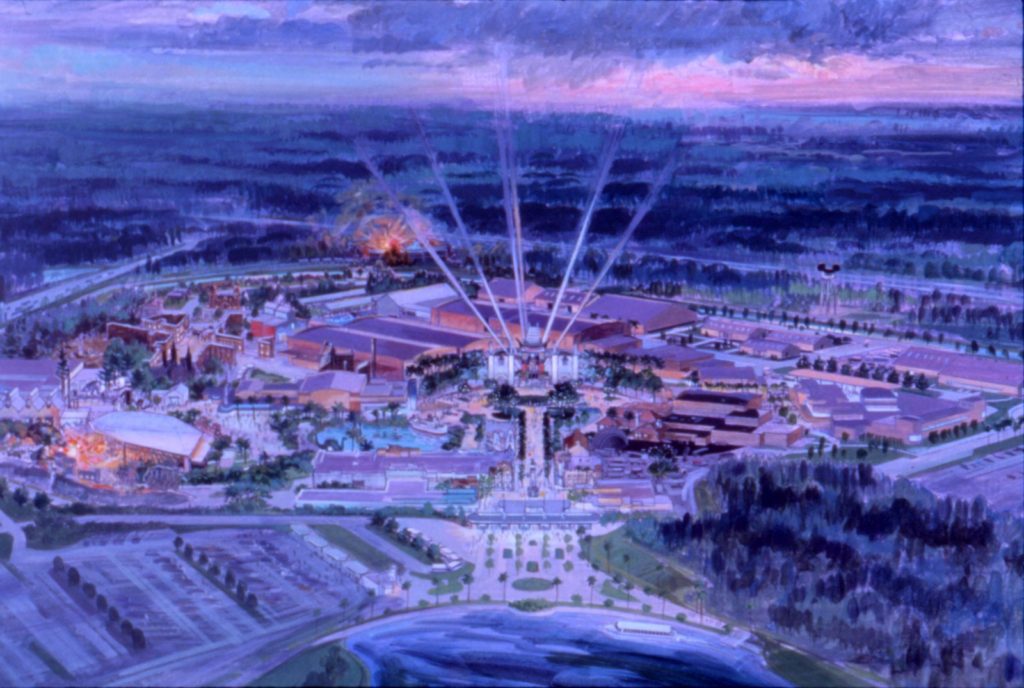
You have to remember that during its early concepting, the park now known as Disney’s Hollywood Studios actually began life as “The Disney-MGM Studio Tour” – not quite a theme park, but a sort of half-day, “add-on” attraction, meant to be paired with a morning at Typhoon Lagoon or an afternoon at Downtown Disney. But when the concept grew and the simpler framing of a third theme park (alongside Magic Kingdom and EPCOT Center) prevailed, the Disney-MGM Studios rose to meet its qualification – if not in content, than in attendance.
Remember that when the park opened, the Disney-MGM Studios was comprised of only two rides (albeit, substantially-scaled ones), each anchoring its respective half of the park’s dual identity.
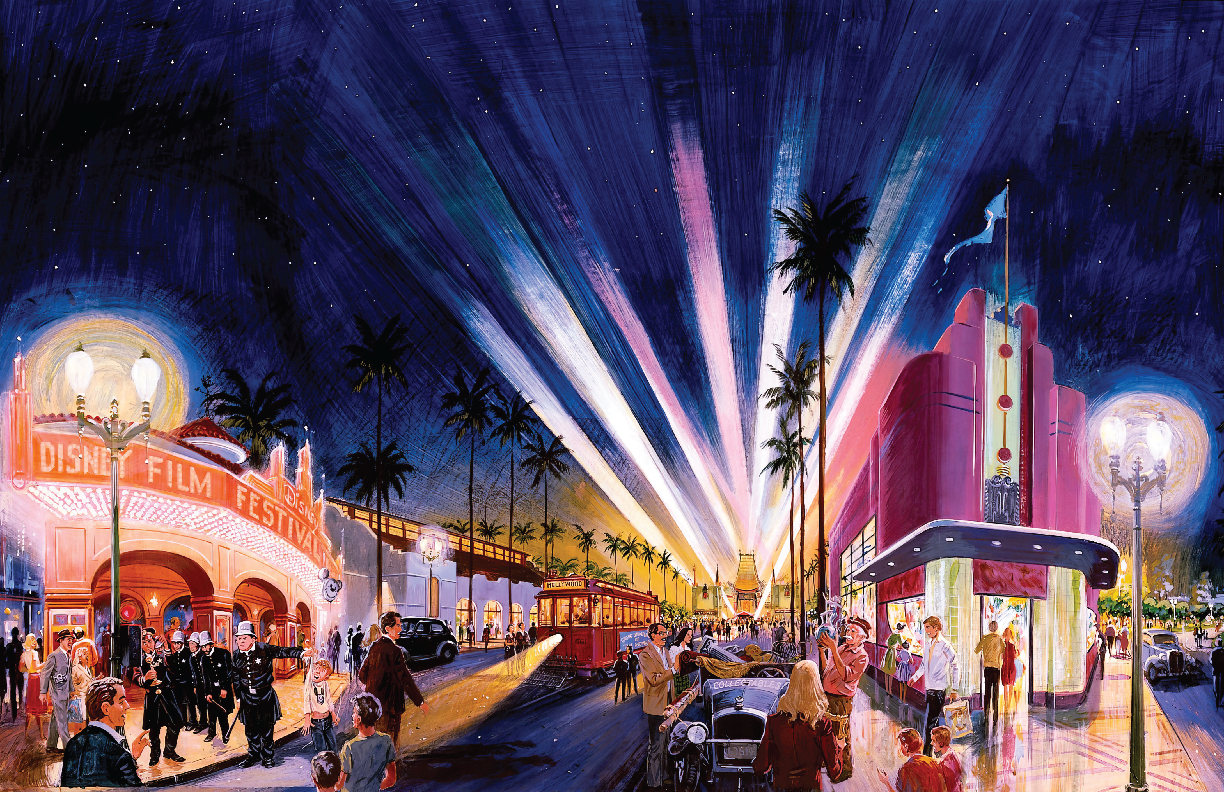
The park’s front half – comprised then only of what are now known as Hollywood Blvd. and Echo Lake – was meant to embody “a Hollywood that never was, but always will be.” This was Eisner’s love letter to the romance and glamor that surrounds the idea of moviemaking – images of searchlights against the Hollywood Hills, the allure of stardom, and the haze of Hollywood’s heyday that clings to images of Tinseltown’s past with a density to exceed L.A.’s ’90s smog.
It turned out to be an exceedingly perfect framing device; a palm-lined, neon, jazzy Hollywood Blvd. as a clear “Main Street” for a park about movies, and with a recreation of Sid Grauman’s iconic and exotic Chinese Theater as the park’s “Castle,” containing within the Lost Legend: The Great Movie Ride – a 20-minute Animatronic-filled “journey into the movies,” celebrating the best (licensing-accessible) scenes from Hollywood history, from Casablanca to Raiders of the Lost Ark.
Juxtaposed against that sort of quasi-historical manifestation of stardom was the park’s rear half – a real, working production facility that wore its industriousness on its sleeve. Basically, the would-be brains of the Disney-MGM Studios were made manifest as a sprawling backlot of cavernous beige soundstages, false fronts, and production offices connected by arterial roadways.

That half of the park was accessed only by way of the Backstage Studio Tour – a multi-modal, multi-hour attraction that whisked guests by tram and by foot through the property. Along the course, guests would walk through a real animation studio, peering over the shoulders of Disney animators hard at work on the company’s next Renaissance masterpiece; they’d be whisked via tram to Catastrophe Canyon – an all-out special effects demonstration of flood, fire, and quake; tour the “Streets of New York” and “Residential Street,” each camera-ready; and ascend to the catwalks lofted high in real soundstages, gazing down at actual movies and television in actual production.
Yes, beneath that mouse-eared water tower, inside those plain, tan soundstages, the real magic of the movies would be laid bare – and outside of, say, Universal Studios in Hollywood, California (oh, and their new outpost in Orlando taking shape at the same time…) where else could a regular ole person like you or I actually have a chance at turning the corner and seeing a celebrity hard at work on a really-for-real big screen film?!

Visitorship at the Disney-MGM Studios far outpaced Disney’s projections – so much so that the park required some immediate reconfiguring, including opening the “Streets of America” to foot traffic, the licensing of new characters (Power Rangers! Teenage Mutant Ninja Turtles! Goosebumps!), and the greenlighting of expansions that came to be (like Sunset Blvd. and its Modern Marvel: The Twilight Zone Tower of Terror) and even more than didn’t (including Muppet Studios and a Who Framed Roger Rabbit? land). The Disney-MGM Studios was the kind of unmistakable hit that Disney hadn’t seen since Tokyo Disneyland – a park that people couldn’t get enough of.
Sure, eventually Disney would find itself contending with a studio-themed theme park where no actual film or television production was taking place, necessitating piecemeal solutions to a functionally broken park layout, a whole bunch of empty beige buildings, and a culture for whom “behind-the-scenes” DVD extras, digital effects, and social media sort of sapped the thrill of seeing behind the scenes… But at the dawn of the ’90s, the concept looked malleable, responsive, and “finger-on-the-pulse” in a way that the more timeless & historic Magic Kingdom and the grand & intellectual EPCOT couldn’t.
The “Disney-MGM Studios” concept, Eisner believed, was highly franchisable.
So even though Disney didn’t own or operate Tokyo Disneyland, Eisner did begin to impress upon its owners – the Oriental Land Company – that if the runaway cultural and financial success of their park was coalescing into the potential for a second gate, they ought to consider opening their own “Disney-MGM Studios Japan.” After all, just as Tokyo Disneyland borrowed all the best of Disneyland and Magic Kingdom, a Japanese studio park could take all the best of the Disney-MGM Studios in Orlando…and Paris!
Yep… The Disney-MGM Studios Europe was a go…
the strangest thing about this whole project to me is the fact that paris didnt attempt to fight or even redesign arendelle so they weren’t left with the worst of the three lands as its lynchpin 2 years after the others opened.
For most people who’ve visited both the consensus seems to be hong kong has the vastly better land while tokyo has the vastly better ride. Then Paris is coming along and getting hong kong’s lesser ride and half of the land it has and nothing from tokyo. I know that guests are overwhelmingly local but still youd think paris would want something unique about their arendelle but instead they seem to be basing the expansion off of half of hong kong’s land.
the whole strategy here just seems so weird
Absolutely true. Even from the earliest artwork of the park’s big expansion, people were zooming in and going, “Wait, it’s only half of Galaxy’s Edge, too?” That artwork has what would typically be the Millennium Falcon Smugglers Run half of the land, but with an X-Wing instead of the Falcon, so it was like, “Okay, so… it’ll be Black Spire Outpost, but with Rise of the Resistance?” I really do this that was their M.O. here the whole time – basically “sampler” versions of the “Living Lands” designed for other parks.
It’s not like the Sliding Sleighs ride in Hong Kong is a masterpiece, but yes, it’s totally nonsensical that Frozen Ever After – Frozen Ever After! – is what awaits at the end of the literal and metaphorical journey for this park. Even when that ride debuted at EPCOT and all the talk was about how Frozen was too new to have a permanent ride in a park (that “mindset” at Disney feels ancient now…) I said that Frozen definitely deserved a ride… it just deserved a better ride than even the best makeover of Maelstrom could produce. And now we see that ride recreated two more times by choice, which is wild… As you said, especially because Tokyo’s exists. I don’t think Disney is at all interested in paying for that (not to mention, OLC probably has a multi-year exclusivity window), but even so, it is somewhat depressing that at the end of this, Walt Disney Studios’ multi-billion-dollar makeover took seven years to result in… (checks notes) Web-Slingers, Flight Force, two flat rides, and Frozen Ever After.
yeah i can accept lesser rides (very very likely that OLC does have an exclusivity clause) but usually id prefer them to be paired with more developed lands. Like HK’s arendelle isnt winning awards for its rides but its arguably the best “land” either Disney or universal has put out in decades just because its absolutely overflowing with everything else that makes a living land
Im concerned these ‘sampler’ lands simply wont be immersive enough. Like HK’s arendelle isnt that big despite how packed it is and its twice the size with you being able to look over the harbour at more land. Pride lands is barely more than a ride with an immersive outdoor queue.
They already tried the “sample disney and if you like it go to a better disney” with original HK and it failed miserably, i hope they dont go that route again