
6. Disney California Adventure is flat, but ready

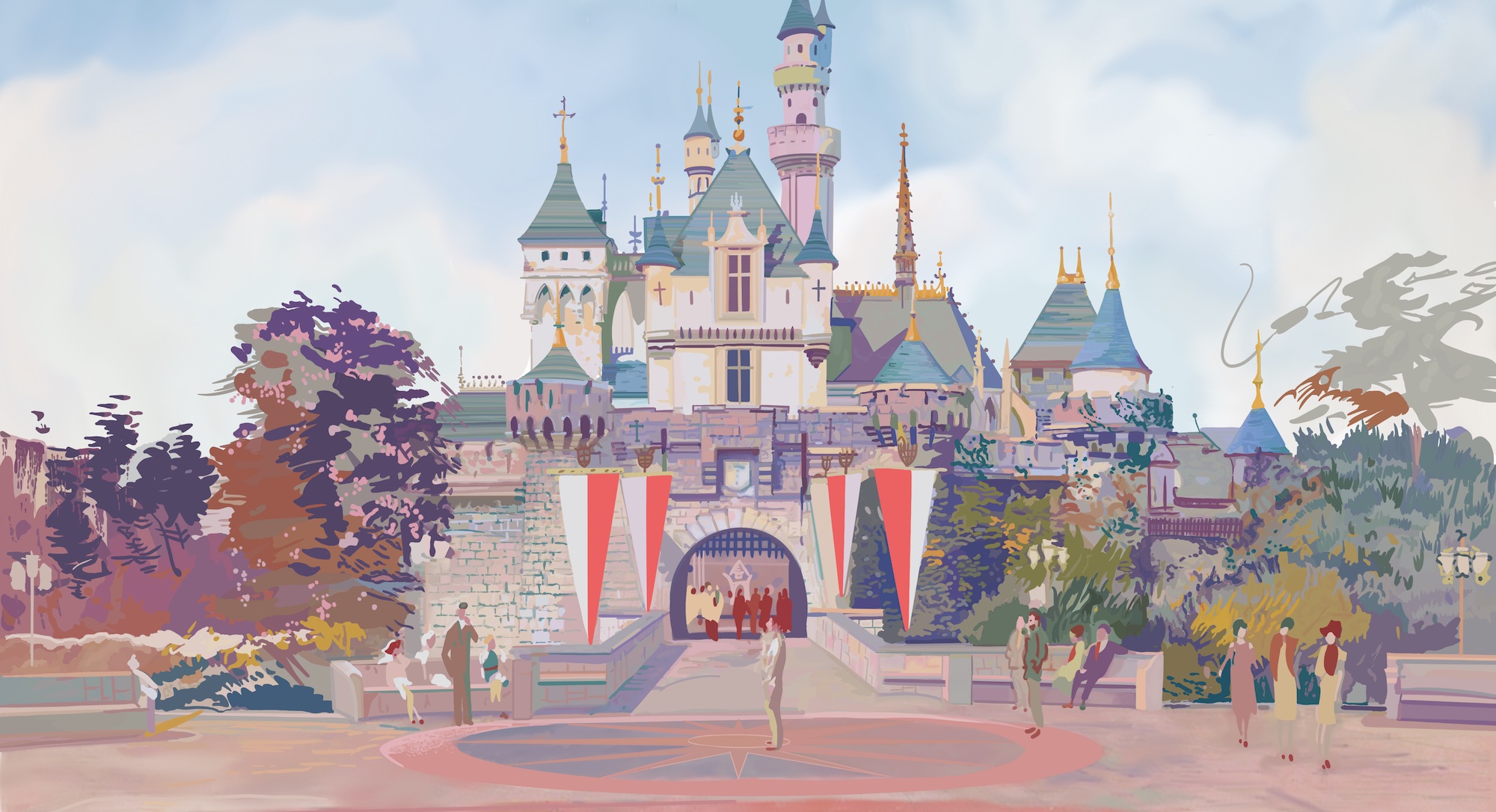
One of the more interesting developments we’ve tracked for the last several years is the attendance of Disney California Adventure. It’s a notable bellwether given that Disneyland’s second gate was a major testbed for former Parks Chairman, later-CEO Bob Chapek’s M.O. – “cheap and cheerful,” low-cost, modern IP overlays. Between 2018 and 2022, the park debuted four projects aiming for “low budget, high impact”: Guardians of the Galaxy – Mission: BREAKOUT!, Pixar Pier, Avengers Campus, and San Fransokyo Square.
Did the “DCA 3.0” experiment work? Well… not really. California Adventure has the distinction of being the only U.S. Disney Park that has actually set a new attendance record post-2020 while the rest are down between 2% and 36% versus 2019 highs. The difference might be that California Adventure didn’t really have a 2019 high to compare to. The park had substantial growth in attendance between 2011 and 2014 (when the “DCA 2.0” effort brought lavish, expensive, historic, and thoughtful expansion to the park, including Buena Vista Street, Cars Land, Grizzly Peak Airfield, and a reimagined Paradise Pier) and really hasn’t budged since.

If you time-traveled to 2016 and told Disney that Mission: Breakout, Pixar Pier, and Avengers Campus would essentially have no statistical impact on the park’s attendance, surely they’d alter course. Since insanity is described as doing the same thing over and over while expecting different results, it’s at least refreshing to know that Disney does have a plan to break through that ceiling.
Returned head of Imagineering Bruce Vaughn (who oversaw the “DCA 2.0” era during his earlier stint with Disney) has been vocal that it’s time for California Adventure to be a full-day, standalone park; that someone should be able to buy a one-day, one-park ticket and just visit California Adventure (an act that may have never happened in human history), and feel satisfied that they’ve had a complete “Disneyland” experience.

The plan to make it happen takes the form of four attractions currently in active construction or development: a thrilling and tech-y Iron Man flat ride, an Avengers E-Ticket dark ride, a Coco boat ride (described as giving the park an equivalent of Pirates of the Caribbean), and an entire Avatar-themed land centered on a next generation dark ride / boat ride. It seems likely that we won’t see the first of those projects open until 2027, meaning we won’t know any of attendance impacts until 2028. But it goes to show that attendance figures can help tell the story of how parks are evolving, and when the M.O. needs to change…
7. Disneyland Paris needs a revival… but will “Disney Adventure World” do the trick?

If you know anything at all about Disney Parks, you probably know that Disneyland Paris has always been something of a problem child. The opulent resort opened in 1992, when its extravagant budget and built-out hotel capacity quickly hit the brick wall of reality via a culture hostile to its existence. A contractually-obligated second theme park – the Declassified Disaster: Walt Disney Studios Park – only made matters worse. The end result is that “Parc Disneyland” – the resort’s Castle Park – hasn’t had a new headlining ride since 1995. (That’s thirty years ago!)
It’s a huge bummer to see that Parc Disneyland saw the only other “slip” in the top 15 outside of Universal Orlando, declining by 1.8%. (Walt Disney Studios is number 20 worldwide, and is also estimated to have declined by 1.8%.) That still positions the two parks as # 1 and #4 in Europe, respectively, but it’s the last thing Disneyland Paris needs.

Notably, 2026 will see Walt Disney Studios officially renamed Disney Adventure World – a would-be relaunch that’s probably more about branding than actual substance. After all, the park’s much-touted multi-billion dollar transformation basically amounts to an Avengers Campus, a Tangled spinner, and a copy of the decade old Frozen Ever After from EPCOT, plus some placemaking meant to soften the viscerally unpleasant park’s backlot harshness. We’ll see if Frozen’s 2026 opening vaults this park into the top 15, or if “Disney Adventure World” turns out to be every bit the dud that Walt Disney Studios was…
The forecast from here…

So here – in classic hand-illustrated Park Lore obsessive style – is a look at how the major Disney and Universal Parks stack up over time. This time next year (so, autumn 2026), we’ll expect to get our first look at TEA / AECOM’s 2025 attendance estimates, drawing a whole new set of conclusion as we look back on the year… What should we expect given the “actuals” we’re living through right now?
For one, we expect we’ll continue to see that “stabilization,” with sub-1% changes at the parks of Disneyland and Walt Disney World. That could change in 2027 and beyond when major expansions at nearly every U.S. Disney Park begin to come online, but again – Disney in particular seems to operate off of the assumption that raising prices limits access in a way they’re okay with! Indeed, they seem happy to continuously operate right up against a pricing ceiling regardless of sentiment or economic trends.

Speaking of which, it’s also probably wise to suspect that we could see across-the-board decreases in the 2025 numbers released in 2026. Not only have Americans largely “gotten it out of their system” in three years of post-pandemic travel extravagance, but the political landscape has an unignorable impact. Immediately after his inauguration as President in 2025, Donald Trump launched America into financial uncertainty marked by unpredictable trade wars with longtime partners, increased costs through almost hilariously-inept use of tariffs, anti-immigration policies that have decimated essential labor forces, and boisterous exceptionalism that has seen international tourism to the U.S. plummet.
In other words, the honeymoon is over as Americans find themselves in a turbulent economy defined by increasing inflation and substantial rise in the cost of living. Theme parks have weathered these conditions before (notably, around 2001 and 2008), but there’s no question that when it comes to discretionary spending, opulent vacations to destination parks are often the first to go in times of economic turmoil. (The “staycation” and a renaissance of regional amusement parks were born of the last such crises.)
Not to mention, this downswing seems inextricably tied to a political administration that looks unlikely to alter course, and occurs in the immediate wake of a boom time that saw parks increase prices and cut perks dramatically, creating an almost comically-hostile environment for cash-strapped customers.

Second, we’ll be waiting with baited breath to see what kind of entry Epic Universe makes, even if it’ll take some extrapolation and guesswork to piece together what six months of 2025 operations will mean in the medium term – for both Universal Orlando and the larger Central Florida ecosystem.
It’s really just the biggest of a post-COVID initiated expansion plan that also positions major additions just over the horizon: Cars, Villains, Monstropolis, and Tropical Americas in Florida; Avengers, Coco, and Pandora in California; Frozen and The Lion King in Paris; and of course, Universal’s continued growth across its three Florida parks.
The “story” of 2024, in a nutshell, appears to be one of relative calm. Perhaps the first true post-pandemic year of operations, we’re seeing major players emerge from a period of incredibly high demand and reduced supply with new pricing, policies, and procedures, leading to plateauing growth that they may very well be fine with thanks to new upcharges and an industry-wide realignment to per cap spending as key performance indicator. So what will 2025’s numbers tell us? We’ll see you back here next year to find out…