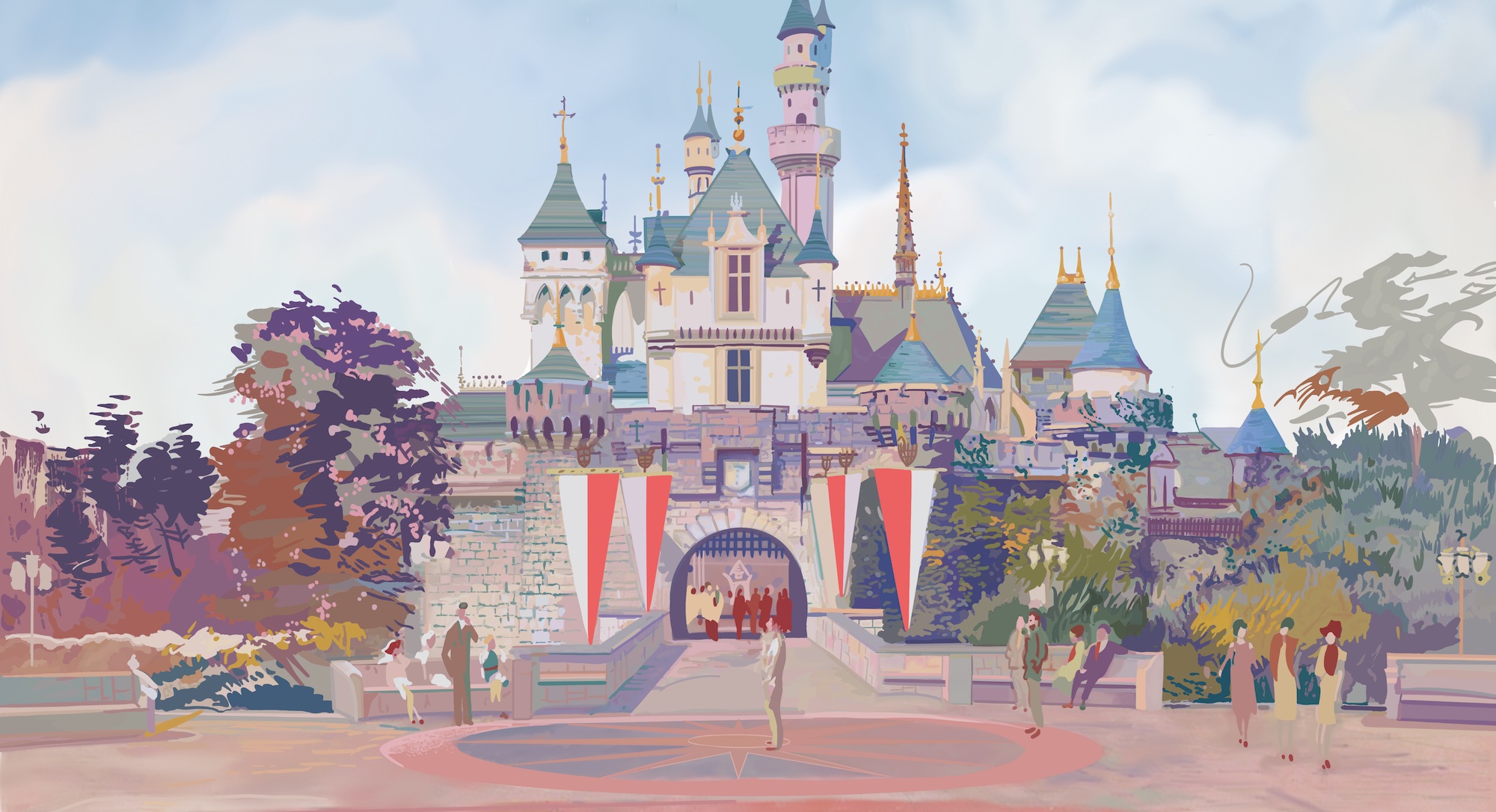


“Once upon a time…” It’s likely that since you’re reading this, you know something about what I do here on Park Lore. But just in case you need caught up, it all started with over a hundred wildly in-depth histories I’ve written about legendary lost attractions, never-built theme park concepts, famously-failed rides, and the modern marvels of themed entertainment design.
That “Legend Library” is still the foundation of this site. But in the years since, I’ve tried to work toward something bigger – offering ways to see the parks we love through new lenses. That mission has created over a hundred hand-drawn ride layouts, data visualization projects, and hundreds of stories written just for those who support this ad-free, quality-over-quantity theme park storytelling site for even $2/month.
Now at last we get to return to a genre here on Park Lore that I love most: full-scale theme park Build-Outs. Many of us grew up doodling our ideas for what we we do to our favorite parks given unlimited time and money, but I always have to shout out S. W. Wilson of Ideal Build-Out, whose work inspired me to take this mix of art and science seriously. Maybe you’ve even checked out my Build-Outs of California Adventure, Magic Kingdom, Hollywood Studios, Animal Kingdom, Islands of Adventure, and Epic Universe – a growing collection of multiversal variants that I love very deeply…

But today, we have some serious work on our hands. Long understood to be the worst Disney theme park on Earth, Walt Disney Studios Park at Disneyland Paris is different from any of the other parks I’ve crafted a Build-Out around. Turning the Ugly Duckling of Disney’s parks into something respectable requires not just thinking creatively around the park’s periphery and amplifying existing big ideas. This park needs a complete foundational rethinking that leverages both the good and bad of Walt Disney Studios in reasonable ways.
Be warned: in what’s becoming an unfortunate new standard (except for those of you ultra-nerds like me who maybe prefer the depth), this Build-Out will need to occupy two separate features, with Part II picking up about halfway through the tour. So like you would with any good book, settle in and let’s dig into my plans to give the park formerly-and-forever known as Walt Disney Studios an actual new story…
And before we head off, remember that you can unlock rare concept art and audio streams in this story, access over 100 Extra Features, and recieve an annual Membership card and postcard art set in the mail by supporting this clickbait-free, in-depth, ad-free theme park storytelling site for as little as $2 / month! Become a Park Lore Member to join the story! Until then, let’s start at the beginning…
In Memoriam

The internet advises that to begin a eulogy, the best course of action is to share a personal anecdote or a meaningful story that captures the essence of the deceased and sets the tone for the rest of the speech. Despite having written a 16,000 word in-depth Declassified Disasters: Walt Disney Studios feature on the park, nothing I could share here would do that more concisely than the words of Imagineering Chief Creative Officer Bruce Vaughn, who famously recalled in Leslie Iwerks’ 2019 docu-series The Imagineering Story:
The first time I went to Paris’ second gate, it was after hours. No kidding, for the first ten minutes, I’m walking through and I’m like, “When are we gonna be in the park?” And [my tour guide] turned to me and he goes, “You’re in the park.” And I’m like, “I’m on stage?” He goes, “You’re on stage.” Like, “This looks backstage. It’s a bunch of gray warehouses.” He goes, “Yeah, it’s supposed to be like a studio.” [I said,] “Oh, god… You gotta be kidding me.”
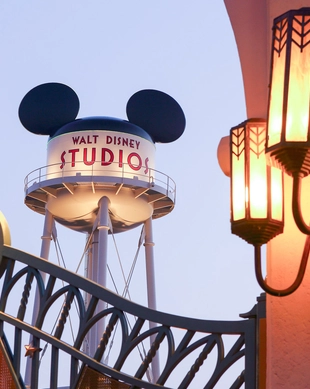
Given Vaughn’s tacit endorsement of funeral candor, I think we can all confidently gather ’round the casket that contains the second gate at Disneyland Paris and admit out loud as it’s lowered into its grave: Walt Disney Studios Park sucked ass.
I’d go so far as to offer: the notion that Walt Disney Studios Park sucked ass is probably the least debatable thing in the Disney Parks fandom. That’s really saying something given that pretty much any opinion you have concerning Disney Parks requires tip-toeing through a minefield of “hot takes.” But the idea that Walt Disney Studios Park sucked ass? It brings us together.
The very existence of Walt Disney Studios is one of those realities that all of us as Disney Parks enthusiasts have sort of quietly agreed that the rest of the world cannot know about. The realities of Walt Disney Studios would leave #DisneyWorldMoms hyperventilating. If TikTokkers ever got ahold of footage from this place, this fandom would be (to borrow a phrase from Gen Z) cooked. And though “What would Walt do?” is always a path best left untraveled, in this case one imagines that if Mr. Disney could’ve visited the only theme park in the world to bear his full name, he would sue for defamation.
Now of course, like any place, there are those with deeply positive memories of their time there – whether as guests, Cast, or designers! And they absolutely shouldn’t take this assessment personally, or let it in any way tarnish their feelings! But I think even they would agree that, yeah, technically, objectively, Walt Disney Studios Park sucked ass. So before we get to my Build-Out, we need to start with the Background – another tale often told, but essential enough to repeat one more time to give context to what’s to come…
Foreword
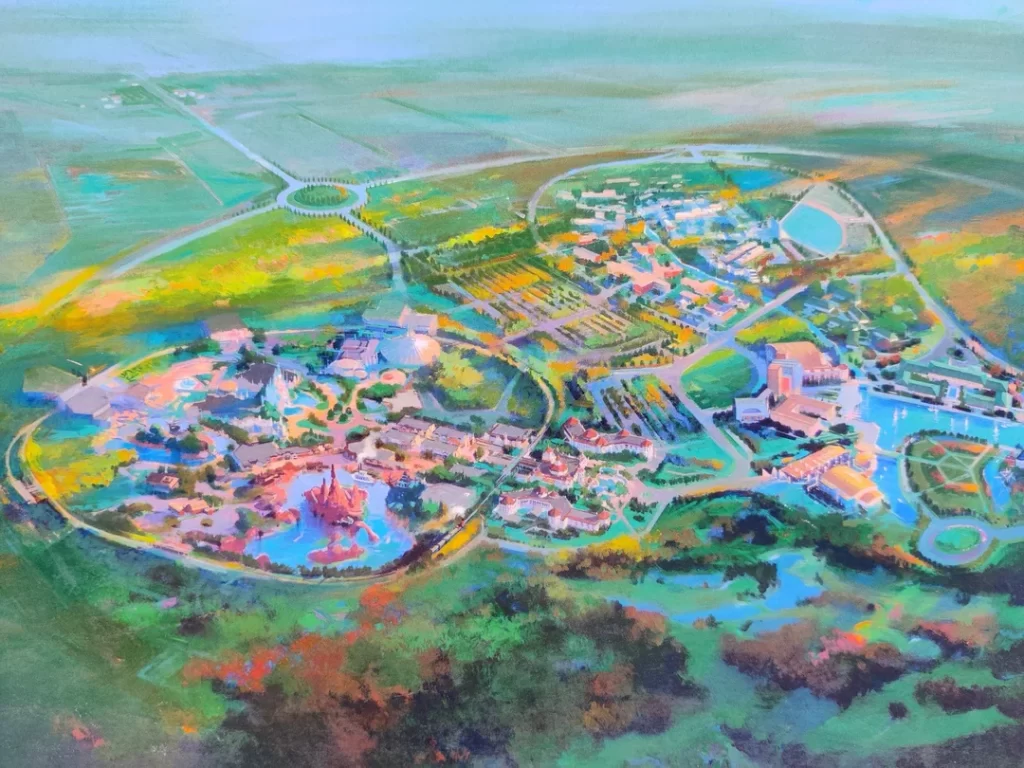
The history here is brief, but essential. Michael Eisner famously poured his all into the development of 1992’s “Euro Disneyland” – a project he envisioned as a keystone piece of his executive legacy. Forged at perhaps the peak of a modern Walt Disney Company, the original “Castle Park” at Euro Disneyland was opulent, authentic, hand-crafted, and artistically ambitious, representing all the extravagance Imagineering could muster and melding it with the most romantic and literary ideals of European culture – actually, a very gracious response to the outright rejection of the concept that the French media had leveled against the Euro Disney project.
But Eisner’s dream to create a Walt Disney World-style destination resort fell flat on its face. First of all, Europeans turned out to be a whole lot more frugal than their American and Japanese counterparts, immediately throwing Disney’s internal revenue projections around restaurants and retail in the garbage. Likewise, Disney quickly found that tourists saw Euro Disneyland as a day trip at best, making the company wish it hadn’t built seven(!) luxury hotels to service their single theme park and shopping district. Euro Disneyland’s hotel occupancy rate in its initial years was barely 50%…

And since the project’s financing was a house-of-cards style shell game that left public shareholders at major risk, the whole thing collapsed nearly instantaneously. Shares of “Euro Disney S.C.A.” that had peaked at $250 with the park’s 1992 opening fell to $25 by 1994, essentially valuing the resort at 10% of its opening day market capitalization two years earlier and causing even the most hopeful financiers to jump ship. Tremendously overburdened in debt and with interest payments it couldn’t cover, Euro Disney was within inches of bankruptcy.
The economic collapse of Disneyland Paris is remembered to this day as a “nexus event” that totally changed the trajectory of The Walt Disney Company – chiefly by getting Eisner himself to question (as quoted in the LA Times) “whether a private company can ever spend this kind of money.” Countless Parks projects across the world were cancelled or downscaled in the wake of Disneyland Paris‘ opening as a wary Eisner swore off of risky, bold, big-budget, elaborate endeavors that had been his hallmark and pivoted to “cheap and cheerful” concepts with minimal investment and risk.

Unfortunately, financial woes don’t overwrite contractual obligations. The agreement that Eisner had signed with the French government back in the ’80s provided favorable land deals required to assemble their 5,200 acre pastoral campus in Marne-la-Vallée… And “use it or lose it” fine print that would require a second theme park by 2002 lest the real estate return to the government. Where once an elaborate Disney-MGM Studios Europe had been penciled-in, the Paris resort instead welcomed Walt Disney Studios – a 35-acre parasitic sister to the gorgeous, sprawling, 100-acre Disneyland Park next door.
If you can, take a moment to expand and peruse the hand-drawn map of the park’s 2002 form above. (Knowing the park as it was will certainly assist in making sense of its evolution since and the solutions we’ll develop for it here.) It’s difficult to convey just how sincerely unappealing Walt Disney Studios Park was when it opened in 2002. As the map shows, this was a park that could charitably be described as three blacktop plazas, which together offered just three rides. In descending order of agreeable appeal, they would be…
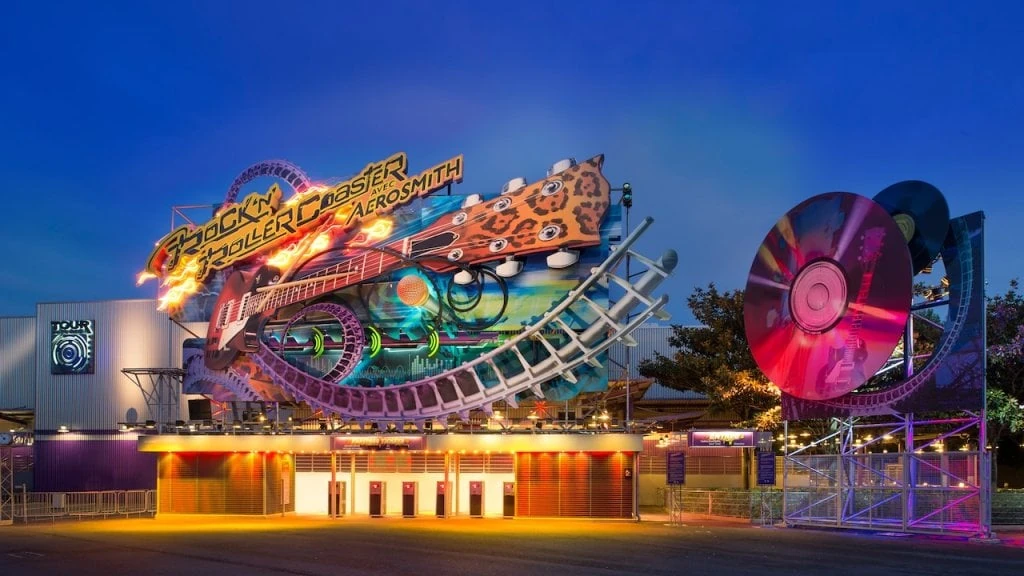
- A copy of Rock ‘n’ Roller Coaster from Disney’s Hollywood Studios in Florida;
- The Magic Carpets Over Agrabah, a Dumbo-style spinner;
- Studio Tram Tour: Behind the Magic – by far the worst attraction Disney had designed this century; a would-be sister to the original Backstage Studio Tour in Florida, but here without even bothering to pretend that anything had or would ever be filmed at Walt Disney Studios
Obviously that “cynical” view discounts two well-liked stage shows (Cinémagique and Animagique), a special effects show (Armageddon: Les Effets Speciaux), and a stunt show (Moteurs… Action!, later copied back to Florida). But the fact remains: this park was bleak. Concrete expanses, barren backlots, industrial scaffolding, and lots and lots of corrugated steel warehouses – er, I mean, soundstages. That’s no accident. The “studio park” model had been chosen specifically for its thriftiness. That also gave the park a personality the polar opposite of Parc Disneyland – stark, empty, cold, and unrelentingly gray.
Instead of increasing attendance at Euro Disney by 50% as the company hoped, between 2001 and 2003 (the first full year with Walt Disney Studios’ impact), attendance at the French resort actually dropped by a million people (from 13 to 12 million). It was the kind of effect only Walt Disney Studios could have. (Okay, okay, maybe the September 11th 2001 terror attacks in New York City played in role in tourism cratering globally, but still.) Instead of being a solution to what ailed Disneyland Paris, Walt Disney Studios became yet another weight dragging the resort down.

Just like its fellow late-era-Eisner park – California Adventure in Anaheim – Disney’s first solution was what we might call a “Band-Aid” period of quick-fix solutions meant to entice people to at least click through the turnstile of the “other park.” The best of that bunch came in late 2007, when the park debuted The Twilight Zone Tower of Terror.
2007 also brought a new “Toon Studio” expansion that added Crush’s Coaster (an enclosed version of the fairground favorite spinning “wild mouse” coaster with a brief dark ride introduction) and Cars Quatre Roues Rallye flat ride near the existing Aladdin spinner. Three years after that, Toy Story Playland brought three family flat rides of its own. It was all more to do, but (aside from Tower of Terror) arguably not the kind of thing to make the park a must-visit, much less to fix its underlying issues or reputation.

The park’s first real infusion of lasting, environmental quality was the opening of the Modern Marvel: Remy’s Ratatouille Adventure in 2014, which at least gave the park a world-class dark ride (and back when trackless dark rides were genuinely cutting edge, at that). More to the point, in those early days of the “Living Land” ethos birthed by the Wizarding World in 2010, it came as part of an entire “Place de Remy” courtyard of romantic, historic Paris that also included a restaurant and shop – the kind of luxuries ne’er before afforded to Walt Disney Studios, where something as simple as a warm lamp in a false second story window was practically a revelation.
In 2015 – the first full year with Ratatouille – the park saw 4.4 million guests, which sounds nice until you hear that Disneyland Paris next door welcomed 10.4 million the same year, suggesting that less than half of the resort’s visitors stepped foot into the second gate, even to see its headlining ride. Clearly, even a “plussed” Walt Disney Studios wasn’t carrying its weight, and far from making Disneyland Paris into the multi-day, multi-park resort destination Disney wanted…
In 2017, Disney officially completed a slow, multi-year buyout of shareholders in Euro Disney S.C.A. (the publicly-owned legal entity serving as Disneyland Paris’ financial backer). With Euro Disney S.C.A. delisted from stock exchanges, Disneyland Paris became wholly-owned by Disney, just like its sisters in Anaheim and Orlando. It’s probably no coincidence that once that acquisition was complete, Disney determined it was time to get serious…
“A whole new world of adventure…”

In 2018, Iger stood with French president Emmanuel Macron to announce the kind of transformational, all-at-once, master-planned reinvestment that Disney had only ever deployed once before: a €2 billion, multi-year, multi-phase reimagining of Walt Disney Studios. Across what would ultimately be eight years of effort, Imagineers would not just revitalize the existing lands, but build beyond the park’s existing (and minuscule) footprint.
The major result of that would be a new central lagoon that would be encircled by immersive, single-IP lands. Yes, following in the footsteps of its Studio sister in Florida, Walt Disney Studios would become a Franken-park with a Hollywood-themed front half of soundstages, grab-bag IP, and Tower of Terror, all sewn onto “immersive, cinematic” lands in the rear – in this case, setting down “sampler sized” versions of California’s Avengers Campus, Florida’s Star Wars: Galaxy’s Edge (eventually replaced with an original Lion King land), and Hong Kong’s World of Frozen to join the existing Toy Story Playland and the Ratatouille mini-land.
Okay, okay, so maybe reverse engineering all of this to work within the park’s existing constraints would functionally be a little less… elegant… than the same ethos in action at, say, Universal Epic Universe… But on paper, the concept was clear: a sleek, modern, brand-forward, SEO-friendly, and franchise-focused movie park comprised of immersive post-Potter “Living Lands,” each doing its best to cover or ignore remnants of the park’s former self.

Approaching the 2026 opening of The World of Frozen, Disney announced that in a necessary effort to give the park a real chance at a public relations reboot, Walt Disney Studios would relaunch under a whole new name: DISNEY ADVENTURE WORLD. Frankly, the name is a perfect encapsulation of the broad, generic, and noncommittal needs of the Disney+ Parks mindset. It might as well have been renamed “Disney+ Adventure Park” (which actually I think is maybe a little less cringe?) given that its contents reflect the streaming service’s brand-forward, metaversal, algorithmic mindset.
As the name, brand, and sunset-hued style guide encapsulate well, Disney Adventure World means nothing. It has no capital-t Theme. It is, very fundamentally, a place where “Living Lands” developed for other resorts can be copied-and-pasted into a park with lots of untapped acreage, no nostalgic past to salvage, and no higher calling than to be a “global hub where Disney stories, characters, and franchises come to life.” And make no mistake: for all that you and I might mean that as a criticism, Disney executives would hear that characterization and excitedly say, “Yes! Exactly!”
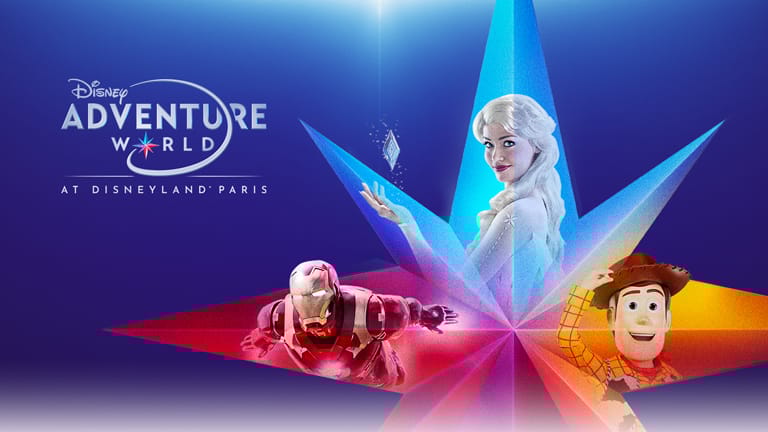
Let’s be honest: if Disney could restart its park business from scratch, they’d probably want every resort to have exactly two theme parks: one (1) “Disneyland Park” for the classics too heavily associated with Disney Parks to abandon, and one (1) “Disney Adventure World” for contemporary, responsive, flexible, modern IPs. We might even have to contend with the paralyzing thought that if that happened and both hypothetical parks were built at once and with the same budget, the “Disney Adventure World” would probably be the main park, with the “Disneyland Park” positioned as the “second gate.”
In Paris’ case, eventually the three or four additional plots around the lagoon will undoubtedly be filled by Pandora, or Zootopia, or Moana, or Monstropolis, or Star Wars, or Cars Land. Any sufficiently-franchisable IP will do, and in any order. And that’s the point! The bar to entry isn’t a particular message or concept so much as it’s that another resort underwrote the research & development so Paris can simply say, “We’ll take one of those, too. Put it in Adventure World.”
But it’s one thing to sort of huff and puff about Disney Adventure World from the outside… On the next page, we’ll level set around the realities of Disneyland Paris’ second gate since that’s what we’ll need to contend with as our Build-Out begins…